
Asia
Exploring Huaqiangbei, one of the world’s largest electronics markets
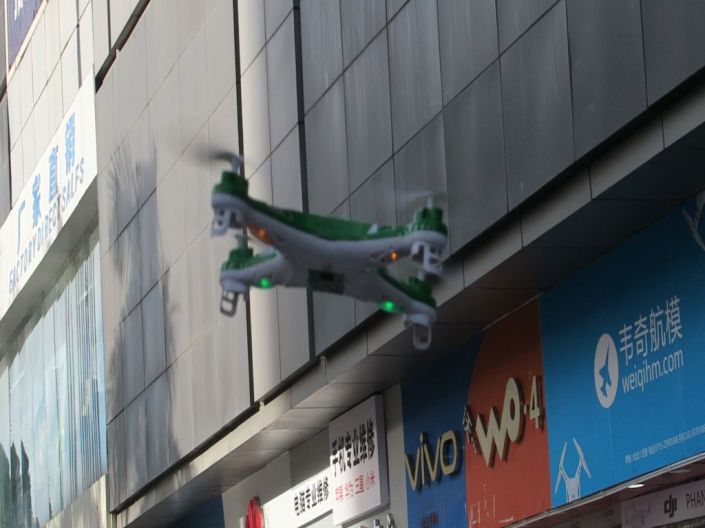
Ah, the joys of living in a Tier 1 Chinese city. So many exciting things to see and do. This week I paid a visit to one of the highlights of this glorious city: Huaqiangbei (华强北) is the largest electronics market in China, and one of the biggest on this very earth. Huaqiangbei is home to electronics of every category including computers, smartphones, helicopter drones, RC anything, cameras, you name it! I thought it might be fun to show the world just what this exciting market is like.
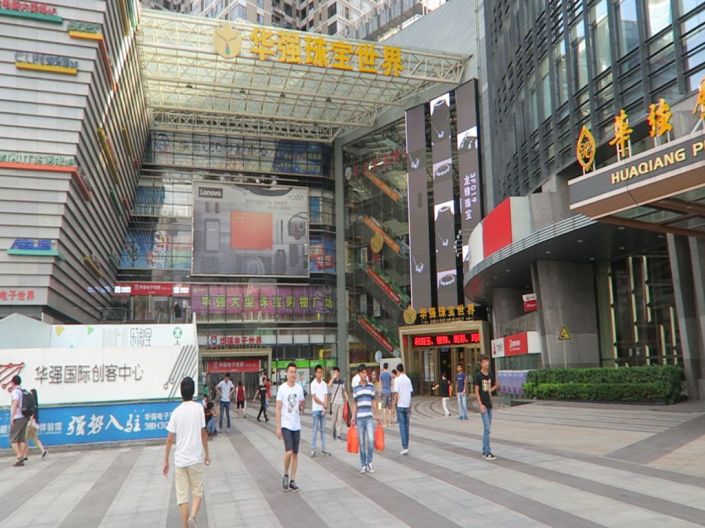
Huaqiangbei has a number of different buildings that have their own markets – some corporate name brands with very recognizable names such as Asus, Dell, Samsung, etc. Other buildings will have few brand names and be full of hundreds of independent resellers pushing products of questionable quality.
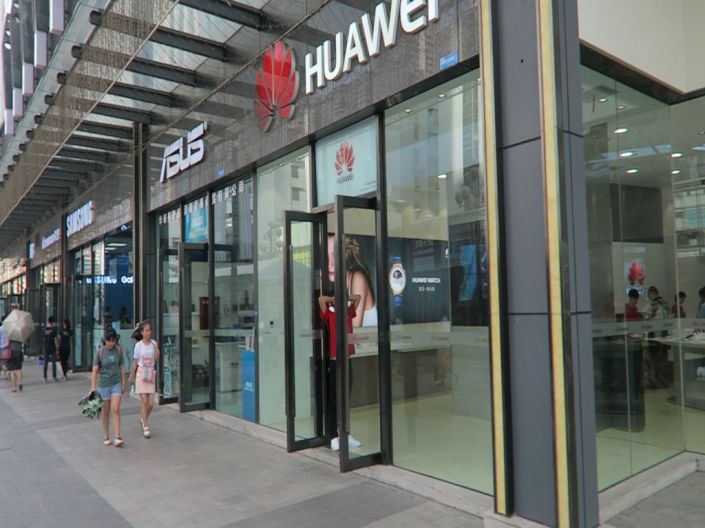
There are also plenty of popular Western and Chinese restaurants here. Burger King is here and in fashion. There are a number of pizza places and food courts serving plenty of different cuisines so you’ll find no shortage of delectable eats here also. However, people don’t come here for food. They come here for electronics. And RC products. Lots of RC products.
Now the main and biggest market at Huaqiangbei is located inside the SEG building. This iconic building is insanely tall and has a history of both shady and good deals. Here are a couple pictures from inside the SEG building below. I wanted to give a better tour of this building in the YouTube video (Located below) but security actually gave me problems with filming, so I had to keep it on the down low.


Overall I had an enjoyable little walk around tour of Huaqiangbei – in the past I have bought many things from here including my current camera (My Canon G7x). Some important tips to remember here:
- Question the great deal you’re about to get. There are a lot of fakes so it is important to make sure whatever you are buying is genuine. If you see an iPhone for 400 RMB, it is fake.
- Don’t forget to bargain – never pay the first price that is asked. You can’t do this at corporate stores, but all independent resellers will try to give you the highest price first. Offering half of what they are asking is usually a pretty good strategy.
- Pay especially close attention to independent resellers. Corporate stores are often 100% legitimate, but even corporate stores can be fake! Yes, there have been fake Apple stores, no joke. Copyright infringement is absolutely rampant in China. I knew someone that bought a Xiaomi Hongmi note from an actual Xiaomi store from Huaqiangbei and it was a fake repackaged old Samsung, so be careful!
Check out my video tour of Huaqiangbei below on my YouTube channel!
Eating some late night Chinese Barbecue in Shenzhen
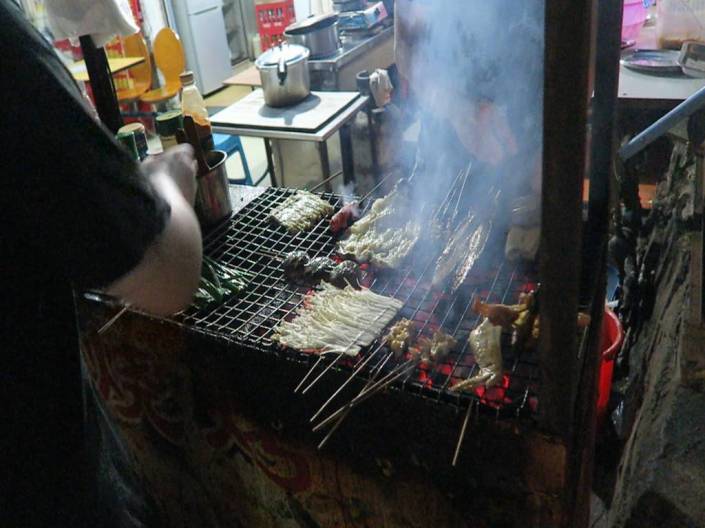
One of the coolest things about China is how vibrant things can be late at night. Of course, it depends what part of the city you’re in but in most parts, there is usually a late night area with street barbecue that runs into the late hours of the night, sometimes as late as 3-5 AM! It was about midnight last night when we developed some strong barbecue cravings, so we decided to head down to one of our local barbecue spots at Dafen here in the city of Shenzhen. Chinese saokao (烧烤, or barbecue) is absolutely delicious, and I intend to show you just how delicious! First, have a peek at some of the things we had to eat that night:
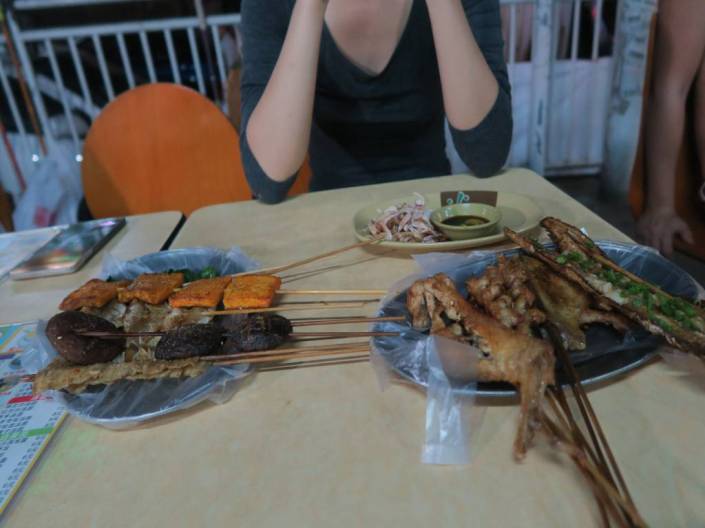
We went to our local barbecue spot (In truth, it was our first time going there since we moved to this new part of town) and checked out what they were offering. We stacked up everything in the basket and gave it to the laoban, and watched them cook it.
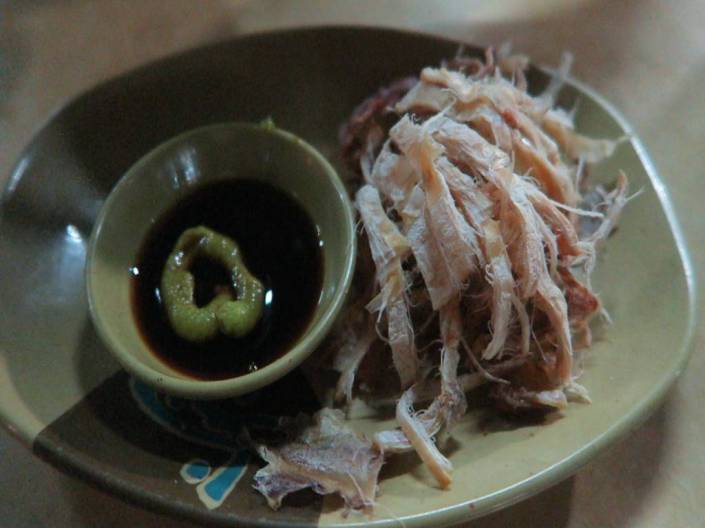
The first thing to sample was an appetizer. We had ordered some dried squid with wasabi and soy sauce, known as youyu (鱿鱼). This had the consistency of something like beef jerky, but with a seafood flavor. When you dip it in the wasabi and soy sauce together, it has a real kick to your nostrils!
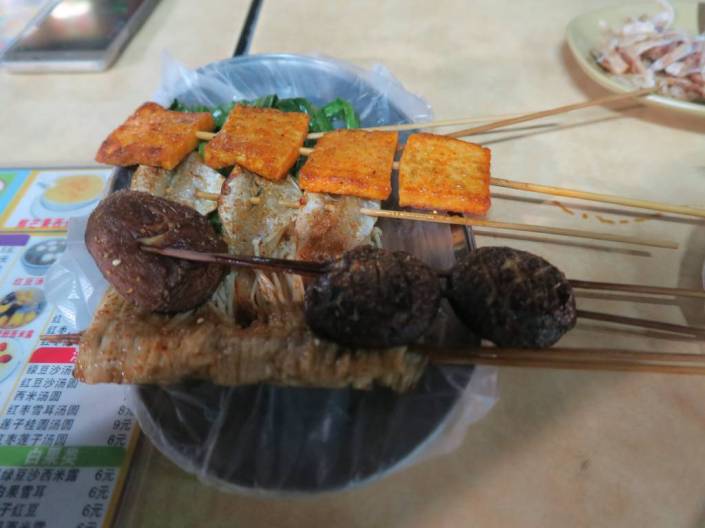
The first two things I had tried were the enoki mushrooms (金针菇) and shiitake mushrooms (香菇). I love all shrooms, as they help you to see life clearly! Barbecued mushrooms are no exception, especially when they are topped with special lajiao. After that came tofu (豆腐)that is covered in some kind of spicy orange sauce and also barbecued. Very delicious – much tastier than plain old tofu, that’s for sure! Following the tofu was some spring onions (韭菜) that were delightfully tasty and flavorful. Of course they were covered in oil and barbecued, so they tasted much better than raw!
Next up was some koi fish (开心鱼). Now I really had no idea what exactly this skewer was when I saw it. I thought it might be dried shrimp that was barbecued. When we got home and looked it up, I was surprised to find out that it was in fact koi fish.
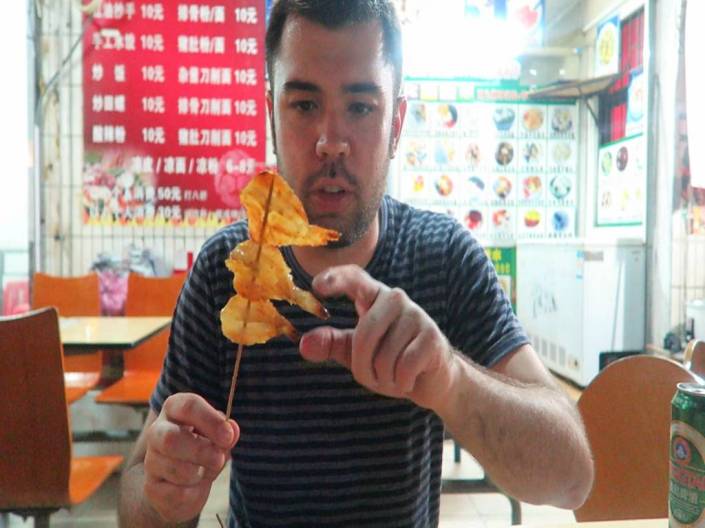
Upon trying this dish, it reminded me a lot more of fish jerky than anything. Overall a nice fishy flavor with that dried chewiness that we so love in jerky.
The last couple dishes were chicken and fish. The chicken (鸡腿) was fantastic. The meat was nice and juicy and tender, some of the skin was crispy, and the lajiao had my mouth on fire at the same time. The fish, which we found out was actually called Ribbonfish (I had thought it was just mackerel) was the best dish of the night, however. The skin was very crispy, the fish meat was pleasant and soft, and the best part is they took out the bones. I rarely eat fish in China because of the strong presence of bones – which I hate! Any Chinese fish dish where the bones are removed is worth 5 stars to me!


Above are the chicken and fish dishes – click the pictures for a bigger view! That was all we ate that night, and my was it good! The total for the bill came out to 62 RMB, or $9.48 USD! What a steal! Check out the video of this Chinese barbecue adventure on my YouTube channel, below! Please subscribe if you enjoy the content! What do you think of Chinese barbecue? Do you enjoy it? Please let me know in the comments!
How to make Honey Mustard Chicken Sandwiches
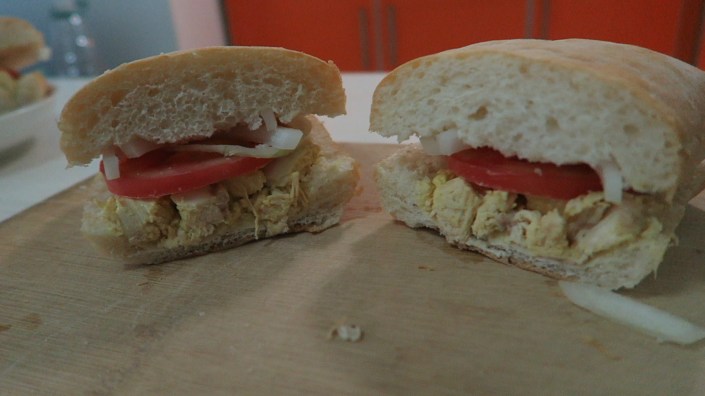
Living in China, Chinese food can get quite boring. That is why I started cooking – before I came to China 2 years ago, I really had no prior knowledge to cooking. After two years of learning, I decided to take my experience to the internet. I like to try and come up with new things all the time, and recently I was really craving some good honey mustard chicken sandwiches. So I came up with a quick and simple recipe using only 7 simple ingredients to make this glorious sandwich you see below:
Ingredients:
- 2 italian bread rolls
- 1-2 tsp mustard
- 1-2 tsp honey
- 1 tbsp mayonnaise
- 1 tomato sliced
- 1 onion sliced
- 2 chicken breasts
To make this sandwich, start by boiling the two chicken breasts in a pot of boiling water for 10 minutes exactly. This will ensure they are not overboiled and are relatively juicy on the inside still. While the chicken is boiling, slice up your tomatoes and onions, and also slice your bread loaves into halves. To make the honey mustard, simply combine the mustard, honey and the mayonnaise into a mixing bowl and stir it until the mixture gets creamy like the honey mustard you are used to seeing.
After the chicken is done boiling, remove the breasts from the pot and slice the breasts into long strips, turning them and slicing them into smaller chunks. When both breasts are cut up into a nice pile of pieces, transfer all the chicken into the bowl with the honey mustard. Stir the chicken together so the honey mustard coats all the chicken pieces nice and evenly.
Now it’s time to make your sandwiches! Using a spoon, spoon out the chicken and honey mustard mixture onto the bread, spreading it out evenly. Cover the chicken with 2 tomato slices and a few sliced onions, and press the sandwich together with the other half of the bread. Cut the sandwich in half for optimal presentation.
I consider this recipe healthier than others because I didn’t use salt, and I didn’t fry the chicken. It’s simply boiled and mixed in with the sauce, and that’s it. I really think you’ll be surprised at how much flavor these sandwiches pack in there – they’re excellent! Check out the recipe on our YouTube video, below!
Walking around Chungking Mansions in Hong Kong
So this last weekend it was time to do a visa run for our mainland China visas, so I went with a friend to Hong Kong for a day trip. We crossed the border at Louhu Station in Shenzhen into Hong Kong and planned to hit two destinations that day: Chungking Mansions (The Indian district of Hong Kong) and the Temple Street Market (The most famous street market in Hong Kong.)
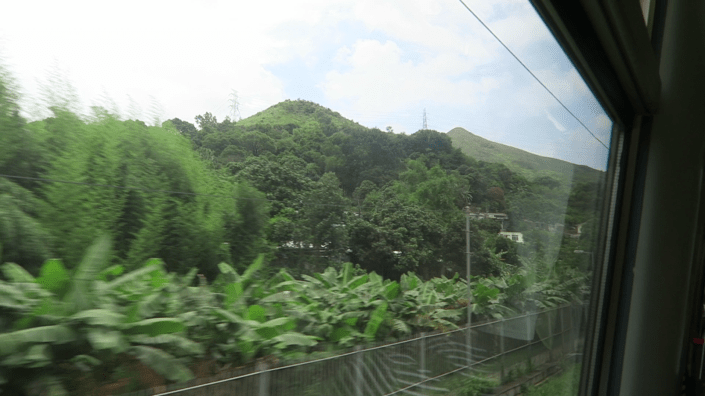
From Lo Wu station, we went all the way to Kowloon Tong and transferred to the green line to Mong Kok. Then we transferred again to the red line and got off at Tsim Tsa Shui where Chungking Mansions is located. Upon arrival, we were bombarded with Indian men trying to sell us drugs. Over and over I kept hearing “Hash? Cocaine? Marijuana?” it was a pretty funny experience. We knew we were in the right place. Chungking Mansions is where I come in Hong Kong to buy all sorts of interesting things that can’t be found in mainland china. Mainly, I buy authentic Indian curry paste so I can make curry dishes like in Indian restaurants at home, and I also buy pinto beans so I can make refried beans (For some reason, pinto beans are just nonexistent in mainland China.)
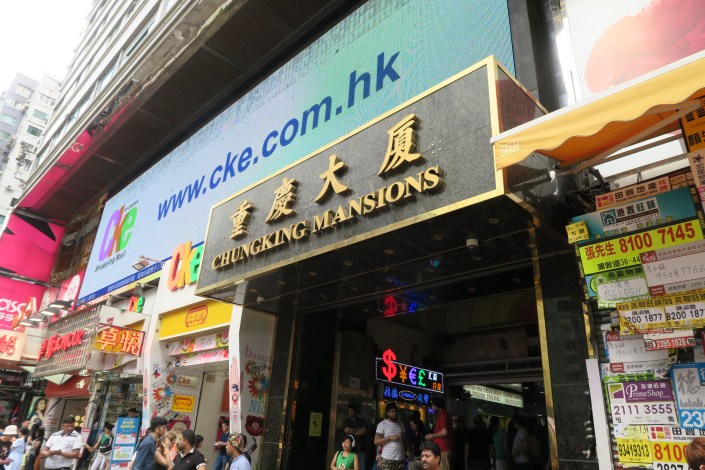
Inside Chungking mansions we did a walk around which I filmed and found some amazing Indian food and some pretty cool deals. You can also get the cheapest hotels in Hong Kong in this area as well. I really love going to Hong Kong, because it’s such a culture shock compared to mainland China. It is really the feeling of being in a more developed country, instead of all Chinese people you truly see a mixing pot of people just like in America. I love it.
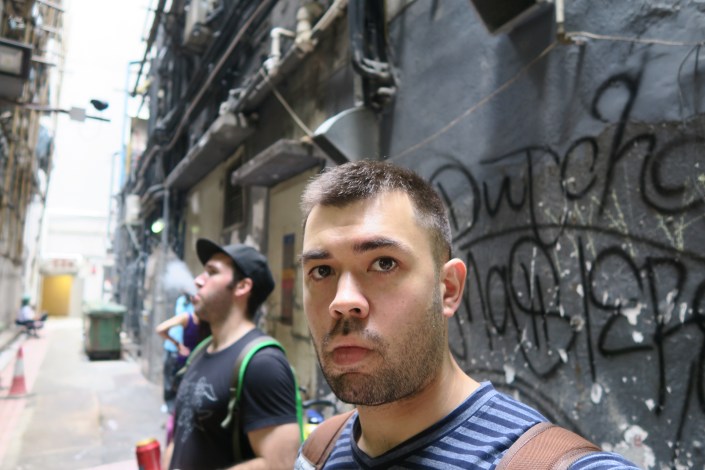
Here are the things I got from Chungking Mansions that day:
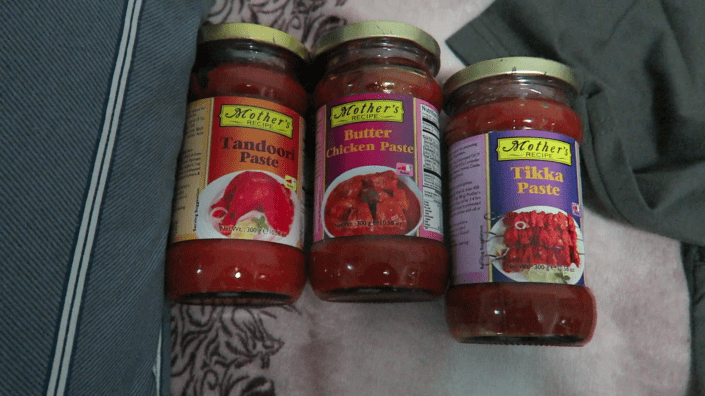
3 cans of authentic Indian curry paste: tikka paste, tandoori paste, and butter chicken paste. I can’t wait to try cooking with it at home! I also visited the Temple Street Market that day, and I will have a walk through video with the bargains I got coming next week!
Take a look at part one of our Hong Kong day trip below at Chungking mansions! Don’t forget to subscribe if you enjoy the video!
Eating fried noodles in Shenzhen!
Today I went to another local laoban that we frequent to order some pidan zhou – Which I have already written about in this blog before, a few weeks ago. Unfortunately they were sold out of the zhou, so we had some chaomian (炒面) instead. Chaomian are high heat wok fried noodles with eggs, pork, and vegetables added along with some spices.
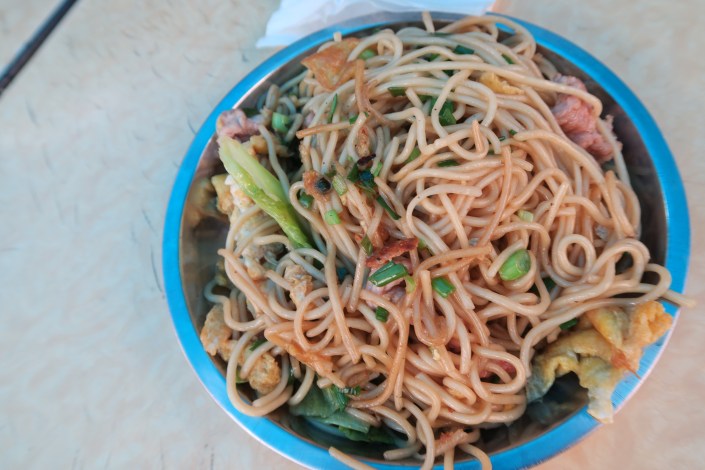
These people are very nice and we frequent their establishment at least a few times a week. Today I asked if we could film them cooking and if they would do a little quick sit down interview with us. They agreed.

Chaomian can be hit or miss in China. I have had great chaomian, and totally lousy chaomian. Of course you can guess that this particularly lady does the chaomian just the way I like them – with 2 eggs, pork, and vegetables added. The end result is an absolutely delicious dish you would very rarely find back home in America, and no, Panda Express does not cut it. Check out the video below to see the cooking, tasting and interview with the laoban.
Walking around Laojie’s (Dongmen) food street in Shenzhen
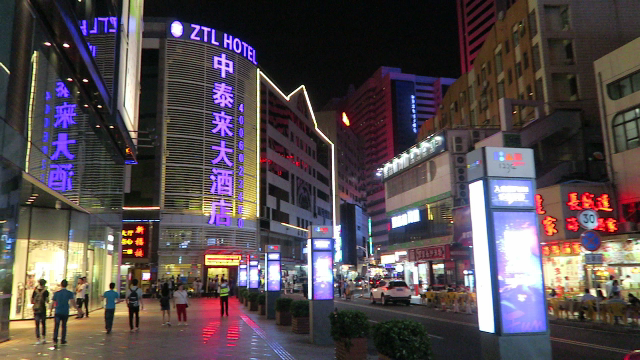
Last night was epic! We took the MTR train from Dafen to Laojie (8 stops, about a 15 minute ride) which is home to some of the best shopping and food in Shenzhen. For my YouTube video channel I made a video sampling a few foods, and touring around the area.
Laojie is a beautiful place. Lots of beautiful women, amazing street barbecue and other foods, what could be sweeter? After getting off at exit D with a couple friends I met up with my girlfriend and we started walking around. I apologize for the low quality pictures, I was filming most of the time and I completely spaced out on taking some high res photos! These are all video grabs from this week’s video:
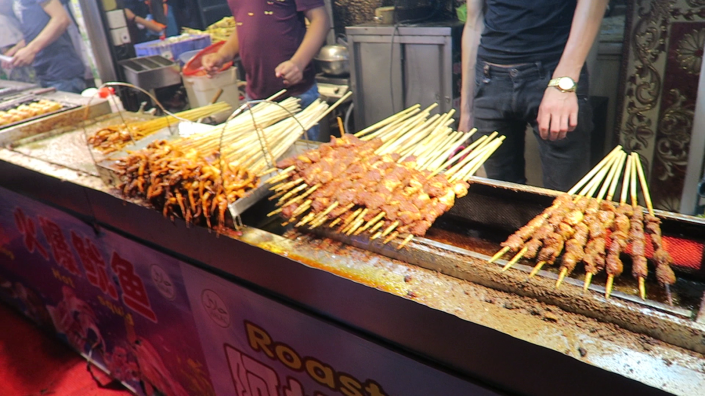
I hadn’t been to the food street that many times so we got lost for a couple minutes, but we found it pretty quickly. While walking there, we ran into an outside barbecue that was serving up youyu ( 鱿鱼 , squid), and yangrou (羊肉, lamb). We couldn’t resist the temptation and we all got a few skewers. The barbecue is well priced, too. You can get 4 skewers of squid for 10RMB ($1.50 USD) or 2 skewers of lamb for the same price. The squid was nice and chewy not overcooked, with lots of spices added. The lamb was delicious and fatty, and for me that’s great because I love animal fat. (Not in excess, of course!)
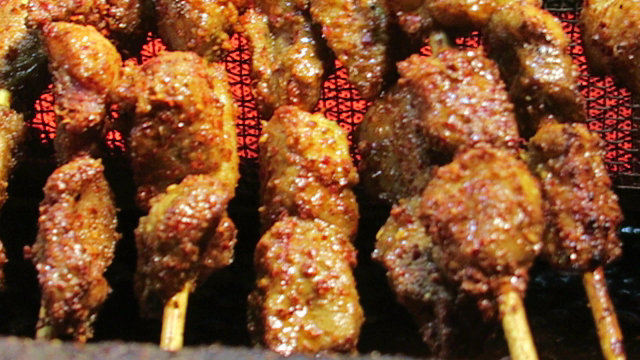
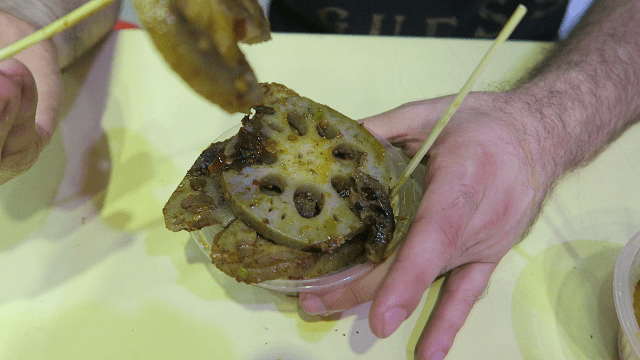
After devouring our skewers, we headed off to the food street. We got there around 9:45 which is pretty late for laojie. Although it is very easy to find street barbecue going until 3-4 in the morning in Shenzhen, Laojie is a bit of a different case. Around 10:00 it appeared that lots of vendors were starting to close down, but lots of people were still serving until we left (Around 10:45) I bought some lotus root (藕片) and some potatoes. There isn’t much to say about the potatoes except that these ones were actually a little bit overcooked (These were leftover at the end of the night) but still pretty tasty. However, they were a bit too salty. The lotus however was very good. Lotus has a really interesting texture and it is probably the crunchiest vegetable I have ever eaten. It’s somewhat comparable to the crunchiness of an apple.
After walking around a bit more and having some delicious leng mian (Cold noodles, 冷面 ) we decided to take the train home since it was early enough (The train stops around 11:30 and it was only around 10:45) and called it a night. Please check out the video of the food crawl below, and if you like it please feel free to subscribe to my channel 🙂
Chongqing noodles: Spicy and delicious!
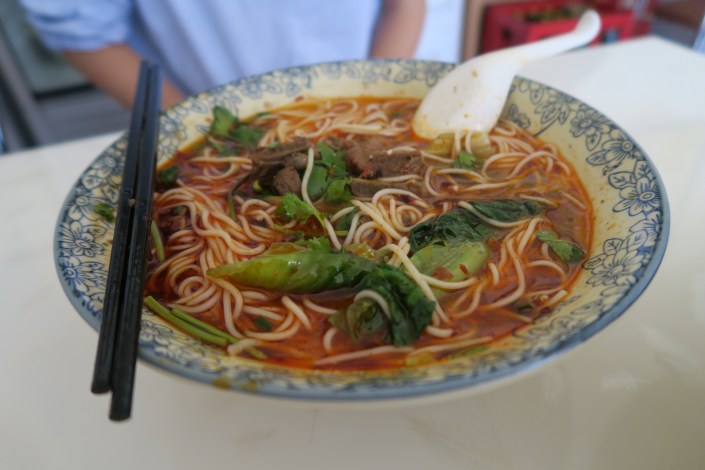
Today while walking around Dafen my girlfriend Maggie and I stumbled upon a restaurant from Chongqing, a city about 1500 kilometers northwest of Shenzhen. The laoban was serving Authentic Chongqing noodles so we decided to have a try. I ordered ma la xiao mian (麻辣小面, pungent and spicy noodles) and Maggie ordered paigu xiao mian (排骨小面, pork rib spicy noodles)
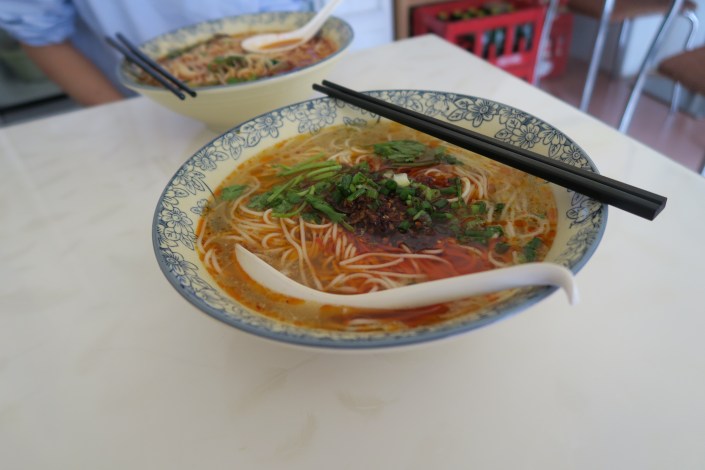
The laoban was a very nice guy. He allowed us to film him cooking the noodles and even sat down with us and had a quick chat. In the video, he boils the noodles and adds them to the soup broth. He then adds a number of things. He adds some chili powder, lajiao, a little more broth, green onions and cilantro. Maggie ordered paigu which has meat in it, so he added some pork ribs to the dish as well.
Upon trying these noodles for the first time, here are my thoughts. The noodles were not too chewy, which I really like, very easy to eat. The sauce and dish overall is pretty spicy. You can taste a lot of chili oil in there and the bite you get from the lajiao is not a normal spicy. It has almost a citrusy sour flavor to it. It sort of reminds me of hot pot, but it’s not really the same thing. The greens (green onions and cilantro) do a lot to enhance the look and flavor of this dish as well.
That’s all for today’s entry but be sure to check out the video for this afternoon’s lunch on my YouTube channel:
Chaoshao: A sweet and delicious Chinese pork dish.
Today I felt like writing about one of my favorite Chinese foods. The Chinese are celebrating labor day weekend, so traffic in the city is out of control. I’m on the 21st floor but all I can hear are mass numbers of horns honking from the street below.
But that won’t stop me from updating the blog! Today we returned to our same laoban from last week, the one that makes killer 猪杂汤粉, pork noodles. We ordered our usual, the noodles, but also ordered a few other things as well. From a separate street stall we ordered 20 RMB worth (~$3.09)of some chaoshao, 叉烧, one of my favorite Chinese pork dishes.
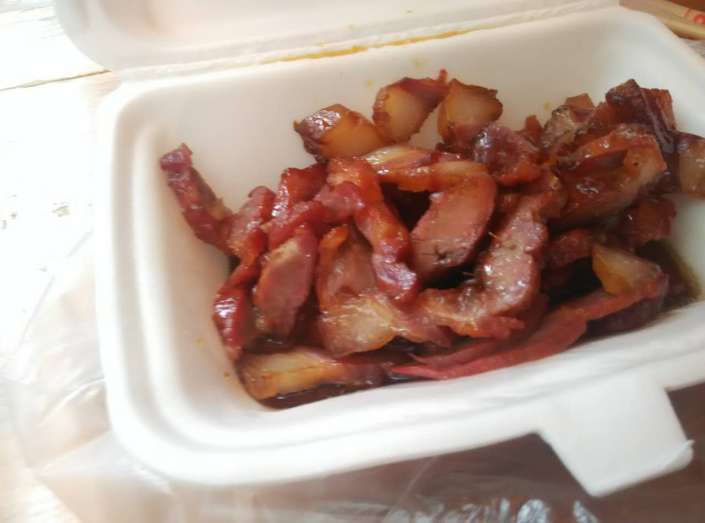
Chaoshao is basically Chinese style roast pork, covered in an incredibly sweet and flavorful sauce. The sauce contains things like soy sauce, spice powder, honey, ginger, garlic, etc. The pork meat is soaked in this marinade for many hours, and then slowly roasted over a cooking fire. Upon tasting this, your flavor receptors immediately go off. It is a great combination of salty and sweet, nice tender meat that isn’t dry. This meat is seriously, OUTSTANDING and I am sure could win awards back home. It’s so good we even combined it with our noodles.
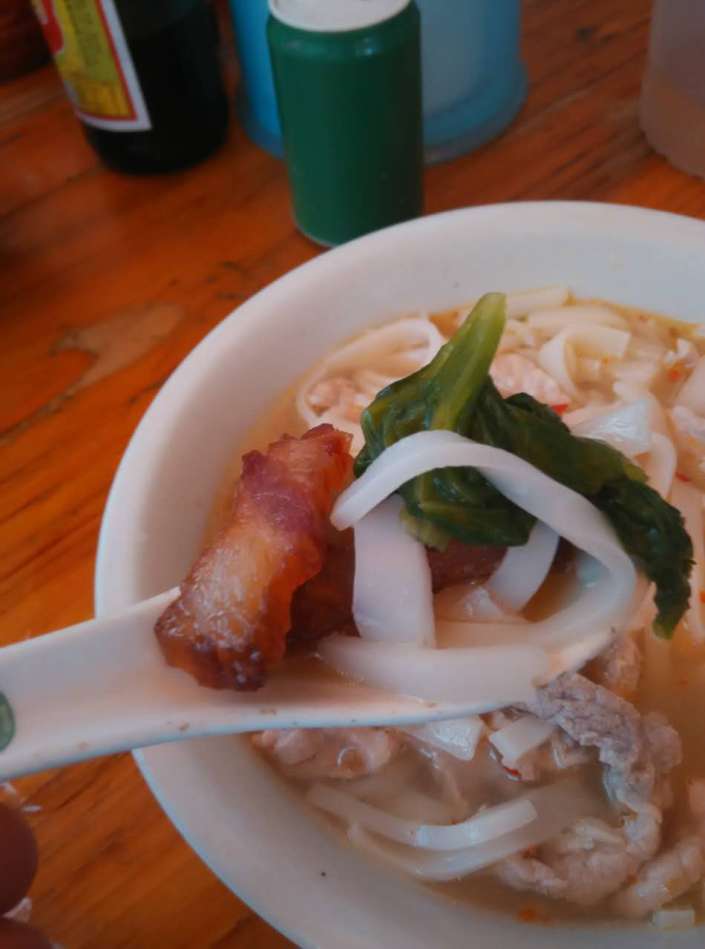
From our noodle laoban we also ordered one other dish: 牛筋丸, or niu jin wan, also known as beef meatballs. The meatballs are 1 rmb each, at a combined cost of 10RMB for all of them (~$1.54)


The meatballs were absolutely outstanding. In China you will often find street vendors selling Chinese soups with vegetables where you can pick the things you want to add from trays (Vegetables, meats, etc) and have the laoban boil them together in a soup for you. Usually the meatballs and fish balls that you will find at these stands are processed factory foods with who knows what in them. I only order meatballs from this particular laoban because I know she does them fresh and from real beef. They were excellent.
When factoring in the cost of our entire meaty and delightful lunch, it only clocked in at 50 RMB, or about ~$7.72.
I’d like to leave you today with Episode 6 from my YouTube cooking show: The Tomato Herbs and Cheese Toasted Sandwich:
- ← Previous
- 1
- 2
 Ian in China - Living in China content, Asia food and travel videos!