
breakfast
Eating baozi (包子) and skateboarding in China
This morning I went down the street near the metro station at Dafen to grab some baozi and jump on my skateboard for the first time in a VERY long time. I talked about baozi already before in my first blog post, “What’s for breakfast in China?” but I wanted to take a video for this post, so I thought I would bring them back. Also the first baozi article I did was on beef baozi, and today they were pork!
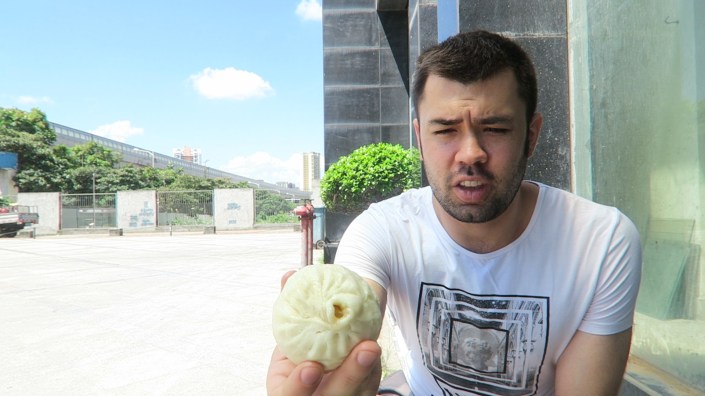
The baozi is a very traditional and one of the most common things that Chinese people eat for breakfast. This particular baozi was full of stuffed pork (Which was fatty and greasy, which is a little heavy for the morning but that’s why you don’t eat too many!) and also some cabbage, if I recall correctly. 1 of these baozi only cost 1 RMB, or $.15 USD so my breakfast only cost $.30 since I had two. That baozi was more than enough fuel to give me the energy I needed to pull off a few skateboarding tricks.
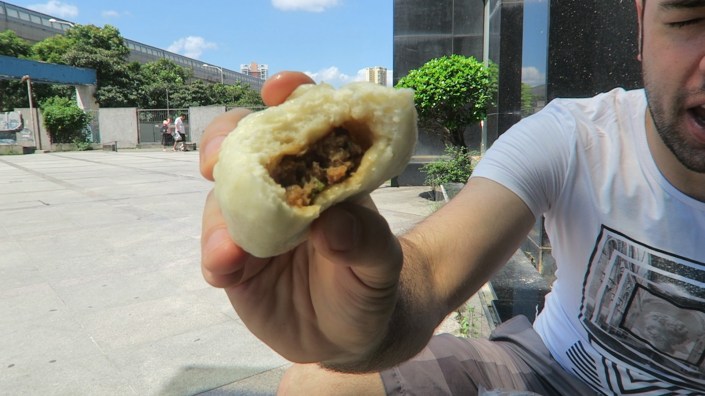
As I proceeded to bite into the delicious baozi, something insane happened. The fatty pork juices dripped out, and nearly landed on my shorts! Luckily I was quick enough to recover, only having to explain to the camera what had happened with my mouth open and simultaneously full of baozi. A baozi stain is no fun – I assure you and I am happy I avoided it. Those juices however, are delicious so I highly recommend taking a more full bite and making sure you get the juice with it! After finishing those delicious baozi, it was time for some skateboarding. I used to skate a lot in my younger years (13-20 years old) but pretty much stopped shortly after high school. However, it’s still fun to roll around and do some tricks sometimes!

An enjoyable morning it was, though hot! By the time I was done skating, I was absolutely drenched in sweat. Nevertheless, please be sure to check out the breakfast video from this morning, which also comes with a little bit of skateboarding attached! What do you think of baozi? Let me know in the comments!
Chang fen: A Chinese breakfast staple
This morning I returned to my local laoban to do a Chinese food video about breakfast. Today we had chang fen (肠粉) which is a common breakfast dish made with rice paste, eggs, vegetables, and ground pork covered in a pork fat broth with soy sauce and chopped garlic. I probably have chang fen at least once a week living here. I find it to be a relatively healthy option – as this is steamed and not fried, and I enjoy eating as healthy as I can.
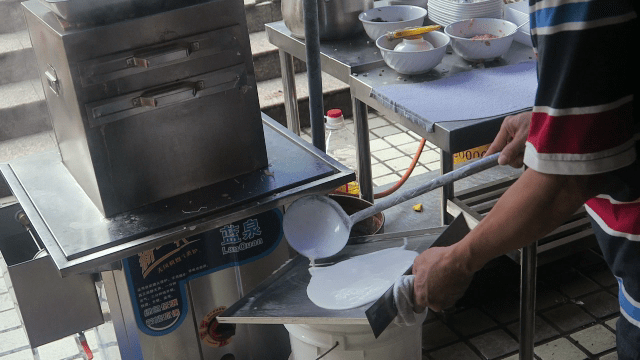
To make chang fen, a large multi-layer steam rack is used. Generally they start by pouring rice paste and covering the tray with it, and then adding ground pork, a few vegetables and cracking an egg or two on top. The mixture is stirred around and sent into the steamer for less than a minute. When it comes out, it is scraped off and set onto a serving plate.
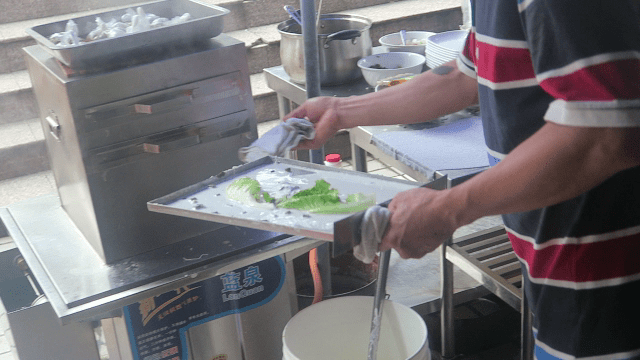
When it comes out, it is quite a pretty sight to behold. The taste of chang fen is interesting to say the least. The texture is sort of a thin jello-ey texture that without the sauce is not exactly bursting with flavor. Rice paste is of course made of white rice, and as we all know white rice has a fairly brand and neutral flavor. However when it is coupled with vegetables, meat, and a nice pork broth with garlic and some chili sauce on top, the flavors go a million ways! The pork broth gives a rich decadent flavor especially when you get those chunks of ground pork in the bite. Grasping some chopped chilis with your chopsticks in a bite adds a spicy aspect to this dish as well.

I also blogged about chang fen back in April, you can see that post here: Chang fen: A cheap, delicious and exotic breakfast in China. Don’t forget to check out the video from this morning’s breakfast which includes video of the cooking process and tasting, from my YouTube channel! Please like/subscribe if you enjoy the content!
Zhou: A traditional Chinese porridge breakfast.
This morning I went down with my girlfriend to yet another local laoban at Dafen. For breakfast we had pi dan shou rou zhou (皮蛋瘦肉粥), which is a delicious rice porridge with pi dan (The century old egg which I have mentioned many times in this blog), a few assorted vegetables and some pork.
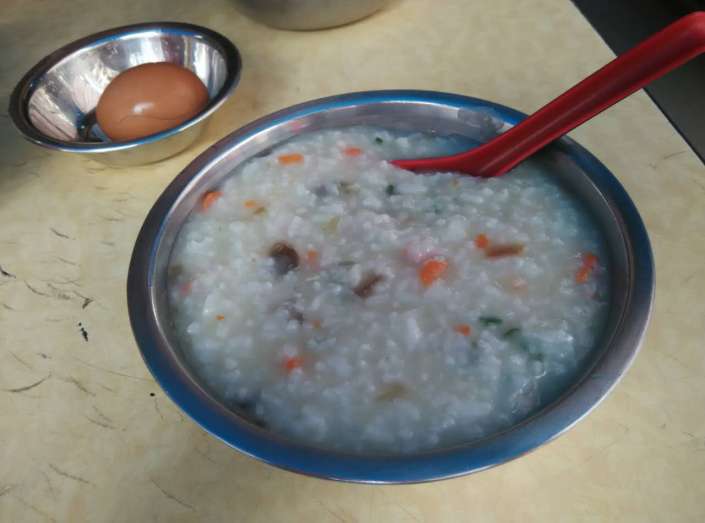
Not only do I absolutely love this porridge, it’s very cheap! At only 3 RMB a bowl, that is about a half dollar US. One bowl is also very filling. This is a very traditional dish that many people eat in Chinese villages throughout the country. This specific zhou however is a little different – many villages will just do a plain rice porridge with nothing else. This one is a bit of a “designer” porridge as it has pi dan and meat and vegetables added.


Let’s talk about the taste of pi dan shou rou zhou. There are a couple words I can use to describe it. Light, creamy, smooth and delicious! Normal rice porridge is well, let’s face it, kind of a dull meal, but Chinese people generally would eat it with a side mantou, 馒头, which is kind of a bread-roll, and vegetables. I mentioned before this is like designer zhou, sort of a fancy kind. The addition of the pi dan is excellent because it gives the zhou a really creamy and delicious flavor and texture. My personal favorite way to eat it is by adding some lajiao to it:
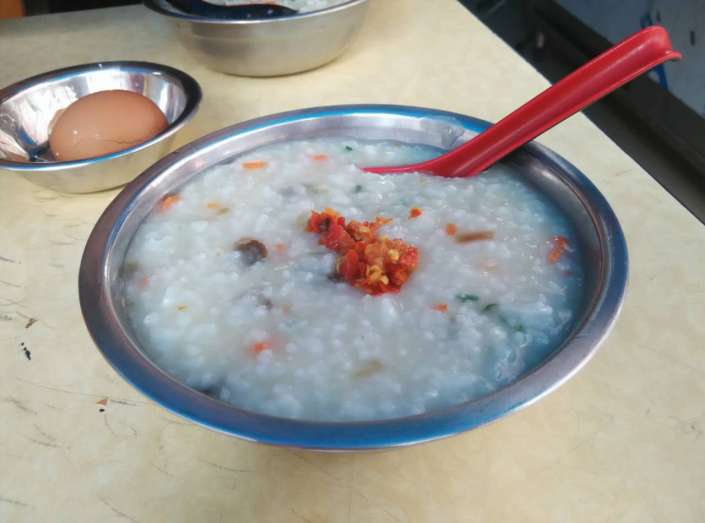
Overall, zhou is one of those classic Chinese breakfasts that is filling, cheap, and delicious. That’s about it for today’s entry but I’d like to leave you with Episode 7 of my cooking show: Lemon Lajiao Chicken!
Chang fen: A cheap, delicious and exotic breakfast in China.
This morning I felt like going down the street to my local laoban (The boss of an establishment in China, in this case the boss of a restaurant) and ordering a bit of Chang fen.
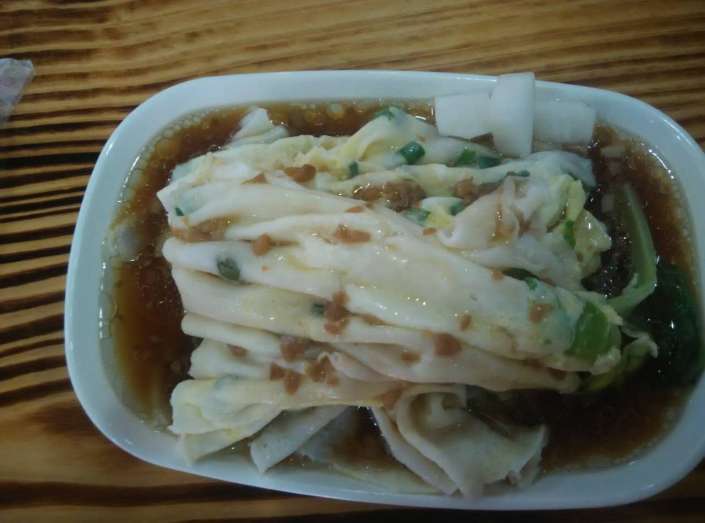
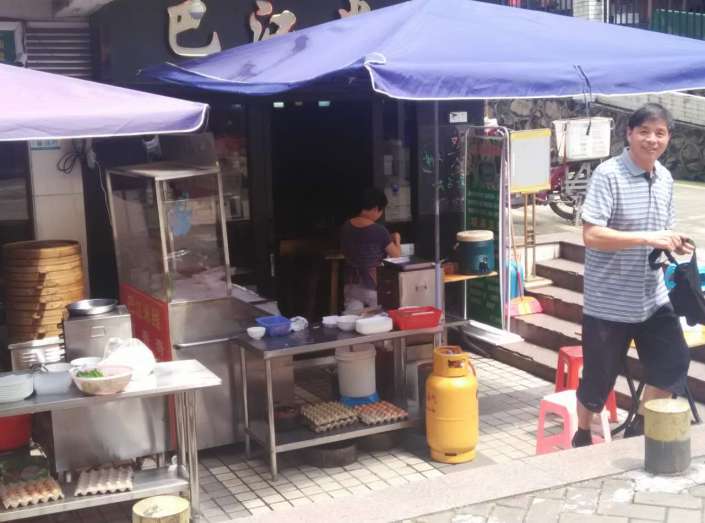
Chang fen (肠粉) is a very common breakfast in China. It is made with rice paste (Rice ground up in a machine and mixed with water) eggs, meat, and vegetables. The way they cook it is by steaming it in a multirack steamer. They crack an egg on a cooking tray, mix in the rice paste, spoon in some ground pork, a couple vegetables and send it in the steamer for a very short time.
When it comes out of the steamer, they pour on top a sauce which is a mixture of soy sauce, oil and water and garlic. When served, I recommend adding a dash of chinese chilis, lajiao (辣椒) to give it a little more kick and flavor. When I came in the restaurant with my girlfriend this morning, the laoban gave us 2 complimentary drinks of dou jiang, 豆浆, or hot soybean milk!

The soybean milk is probably the most common drink at breakfast for Chinese people. It can be served hot and cold, and is very refreshing either way.
When you bite into chang fen for the first time, it might seem a bit plain. It is a breakfast food that can be done very poorly, or very graciously! I have had terrible chang fen, and mind blowing chang fen. This restaurant is up there with high quality, but not quite the best. However, the cost is just amazing. One order of chang fen at most places in the city runs for about 4 ¥, or ~.64 USD! I got two eggs with mine, so mine was 5¥, about .80 cents. For the two of us it was only 9¥ total, ~$1.50! The soybean milk was complimentary but normally costs around 2¥, .32 cents.
To describe the taste, think of rice. The base of this dish is a rice paste, so think of rice but in sheets instead of rice grains. The texture is different, but the flavor is a bit plain and the same as eating white rice. This is why they have the sauce served with it to give it more flavor, and also adding lajiao or cilantro on top is a good way to bring out the flavor.


Overall I definitely recommend trying chang fen if you are in China, or even recommend it as a daily breakfast if you live here. It is cheap, delicious, and relatively healthy compared to most foods on the street. I’ll leave you with a recipe for two bean spicy beef chili, which is episode 5 on my cooking show (The lighting in this episode is not very good, I apologize for that, but in all episodes after the lighting issue is fixed 🙂
What’s for breakfast in China?
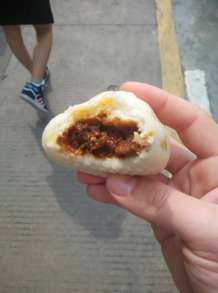
Good morning guys. It’s about 10:47AM in China here, which means back home in California it’s 7:46pm. I woke up just awhile ago and had to make a trip to Wal Mart, so I grabbed some breakfast on the way. In China, it’s very common for people to work long hours and thus have less time to cook. So often times, people will take their breakfast togo, which is what I did this morning. As I got outside my apartment building (I live on the 21st floor) I stopped at one of the storefronts about 50 steps from my door. I picked up 4 niurou baozi. Before you become afraid of the name let me explain: “beef stuffed bun” is the literal translation here. Baozi, or 包子, is referring to a very common stuffed and steamed bun that many Chinese people eat for breakfast. The baozi can have pork, beef, vegetables, sweet potato, and a variety of other ingredients. My favorite buns would have to be beef buns, and of course barbecued pork buns which is a very famous Chinese food. I purchased 4 buns at 1.5 ¥ each, (~$.25 USD) threw them in a bag and took them daobao (to-go!) I went to Wal Mart to buy a few ingredients for a dish that I plan on cooking later this afternoon for a new addition to The Laowai Chef.


As I proceeded to make my way over to Wal Mart I bit into one of the beef buns. Very delicious beef bun and this store front is one of the few that actually does beef buns. Most small breakfast fronts do a variety of buns but usually do not have beef. I don’t know what the quality of the meat is like, probably not great in reality but the taste is phenomenal. A very savory and salty blend, nice texture, and very filling. Just 2 small buns was enough for my breakfast today, that’s about ~$.50! Have a look and check out that inner deliciousness!
That’s it for now but I’d like to also leave you with a link to episode 2 of my cooking show: French Bread Pizza! Take a look at the final product! 😀

 Ian in China - Living in China content, Asia food and travel videos!