
Chinese food
Cooking up some Chinese style carne asada!
Today is Sunday, our day of rest. Of course for me, it’s always a day of cooking, too. Using my new Canon G7X I filmed a recipe for tudou niurou, 牛肉和土豆, or beef and potatoes.
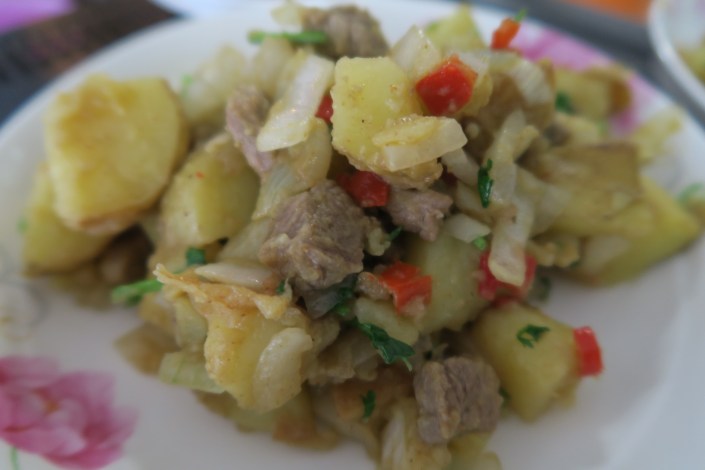
The recipe itself is very simple, and the ingredients are few:
- 5-6 medium potatoes with the skins included
- 350-500g cubed beef
- Garlic powder
- Red pepper
- Cumin
- Salt
- 1 whole onion chopped
- Cilantro (optional)
- 2 teaspoons Chinese lajiao (拉脚) OR
- 2-3 red chili peppers chopped with seeds
Directions: Cut the potatoes in cubes and cut the beef into smaller cubes, like the size of what you would see in a Mexican style burrito. Add olive oil to pan and let it heat up for 10-20 seconds. Add potatoes, stir to coat in oil, then leave for 10-12 minutes minimum. While the potatoes are cooking, slice the beef and the whole onion. Also, add 2 teaspoons of lajiao or 2-3 chopped red chili peppers at this time. After potatoes have been cooking for 12 minutes, add the beef and spices. Stir, and allow to cook for 5 minutes more. After 5 minutes goes by, add the onion and some more spices if desired and cook for 3-5 moe minutes. Add in chopped cilantro at the end and stir it in. Serve and enjoy!
Check out the recipe on my cooking channel below!
Zhou: A traditional Chinese porridge breakfast.
This morning I went down with my girlfriend to yet another local laoban at Dafen. For breakfast we had pi dan shou rou zhou (皮蛋瘦肉粥), which is a delicious rice porridge with pi dan (The century old egg which I have mentioned many times in this blog), a few assorted vegetables and some pork.
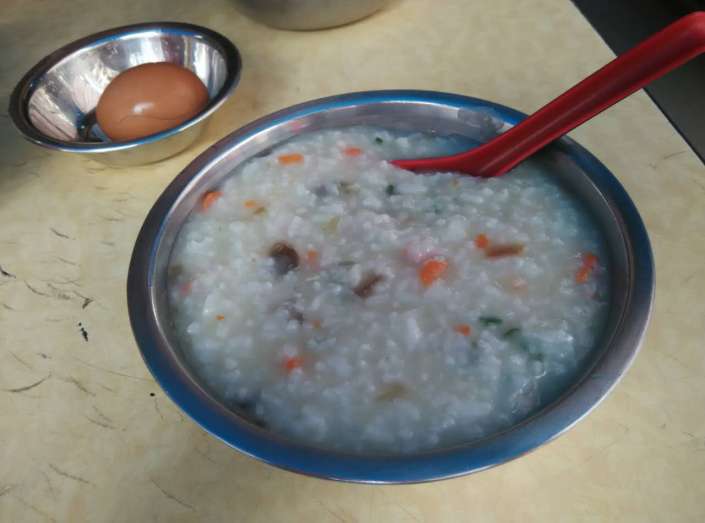
Not only do I absolutely love this porridge, it’s very cheap! At only 3 RMB a bowl, that is about a half dollar US. One bowl is also very filling. This is a very traditional dish that many people eat in Chinese villages throughout the country. This specific zhou however is a little different – many villages will just do a plain rice porridge with nothing else. This one is a bit of a “designer” porridge as it has pi dan and meat and vegetables added.


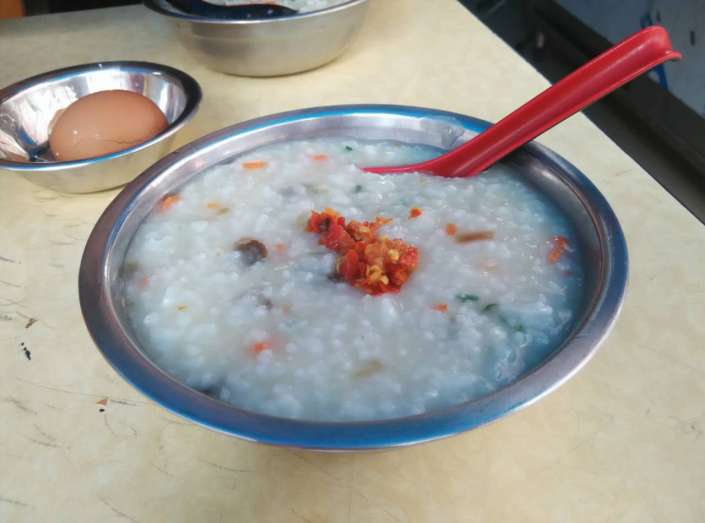
Let’s talk about the taste of pi dan shou rou zhou. There are a couple words I can use to describe it. Light, creamy, smooth and delicious! Normal rice porridge is well, let’s face it, kind of a dull meal, but Chinese people generally would eat it with a side mantou, 馒头, which is kind of a bread-roll, and vegetables. I mentioned before this is like designer zhou, sort of a fancy kind. The addition of the pi dan is excellent because it gives the zhou a really creamy and delicious flavor and texture. My personal favorite way to eat it is by adding some lajiao to it:
Overall, zhou is one of those classic Chinese breakfasts that is filling, cheap, and delicious. That’s about it for today’s entry but I’d like to leave you with Episode 7 of my cooking show: Lemon Lajiao Chicken!
How to make 猪肉包子, Chinese steamed pork buns.
Today my girlfriend Maggie and I did an authentic Chinese recipe for 猪肉包子, or pork steamed buns. If you recognize the name, baozi, the first article on this blog was written about niurou baozi from the streets. We decided to make some at home, but with pork.
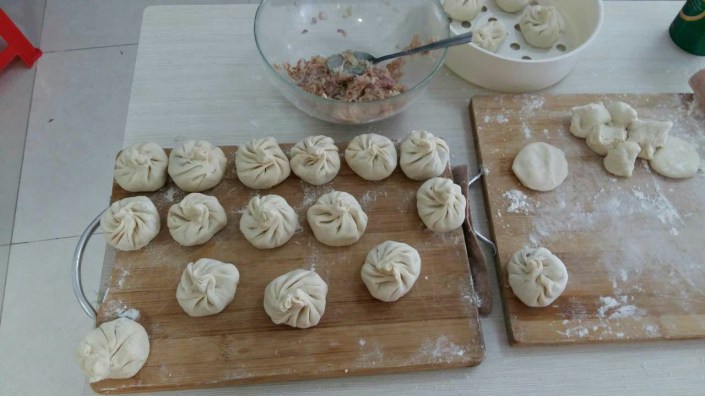
The recipe was quite a bit of work, but the end result was well worth it. Here is the recipe:
Ingredients:
- 1 large leek (chopped)
- 1 kilogram ground pork (You can use less, this is enough for about 30 baozi
- Salt (About 1 tsp)
- Soy sauce (2 cap fulls)
- 1 onion chopped
- 3 cups of flour
- 1 cup of water
That is everything for the baozi, but we also made a nice pungent dipping sauce to go with it which is very easy to make and only has 3 ingredients:
- 2 pieces of garlic chopped
- Soy sauce
- White vinegar (1 tsp)
To see how to make this recipe, check out the video on my cooking channel!
Chaoshao: A sweet and delicious Chinese pork dish.
Today I felt like writing about one of my favorite Chinese foods. The Chinese are celebrating labor day weekend, so traffic in the city is out of control. I’m on the 21st floor but all I can hear are mass numbers of horns honking from the street below.
But that won’t stop me from updating the blog! Today we returned to our same laoban from last week, the one that makes killer 猪杂汤粉, pork noodles. We ordered our usual, the noodles, but also ordered a few other things as well. From a separate street stall we ordered 20 RMB worth (~$3.09)of some chaoshao, 叉烧, one of my favorite Chinese pork dishes.
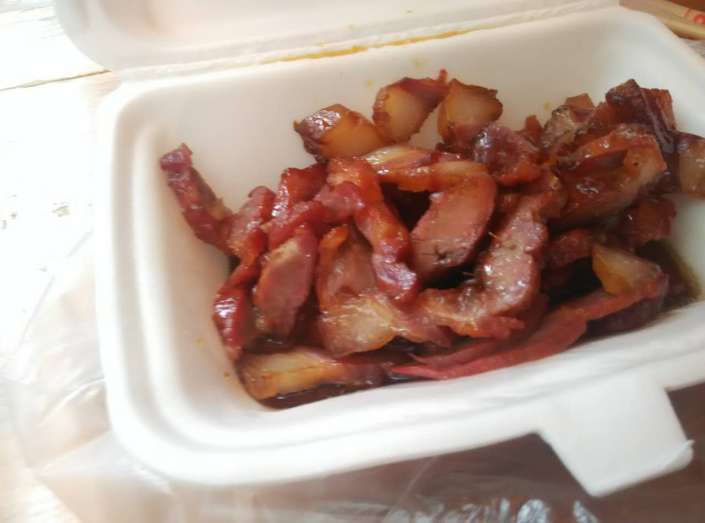
Chaoshao is basically Chinese style roast pork, covered in an incredibly sweet and flavorful sauce. The sauce contains things like soy sauce, spice powder, honey, ginger, garlic, etc. The pork meat is soaked in this marinade for many hours, and then slowly roasted over a cooking fire. Upon tasting this, your flavor receptors immediately go off. It is a great combination of salty and sweet, nice tender meat that isn’t dry. This meat is seriously, OUTSTANDING and I am sure could win awards back home. It’s so good we even combined it with our noodles.
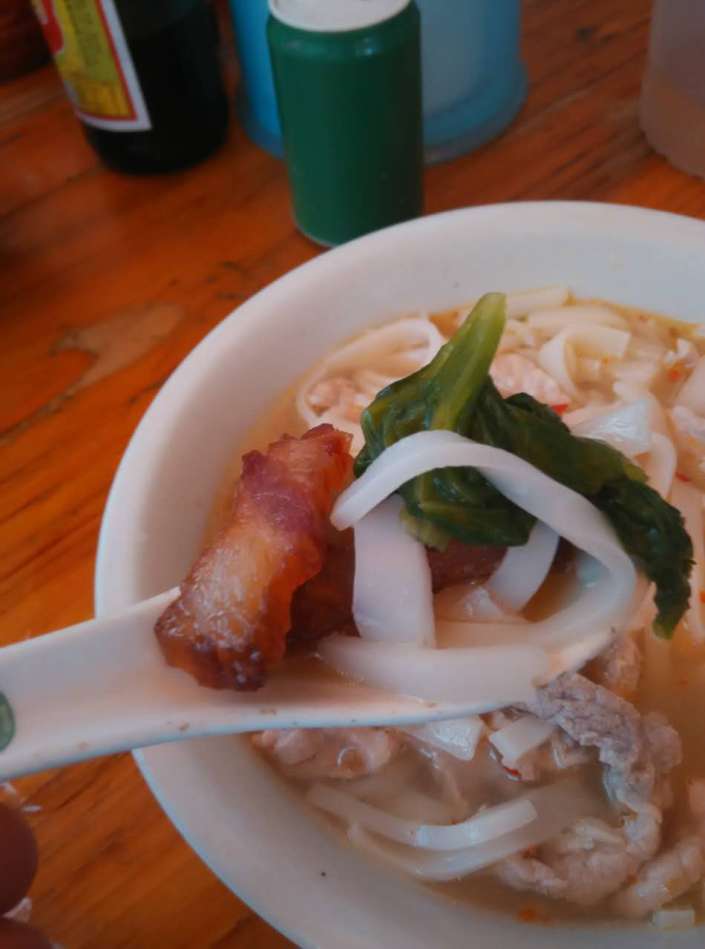
From our noodle laoban we also ordered one other dish: 牛筋丸, or niu jin wan, also known as beef meatballs. The meatballs are 1 rmb each, at a combined cost of 10RMB for all of them (~$1.54)


The meatballs were absolutely outstanding. In China you will often find street vendors selling Chinese soups with vegetables where you can pick the things you want to add from trays (Vegetables, meats, etc) and have the laoban boil them together in a soup for you. Usually the meatballs and fish balls that you will find at these stands are processed factory foods with who knows what in them. I only order meatballs from this particular laoban because I know she does them fresh and from real beef. They were excellent.
When factoring in the cost of our entire meaty and delightful lunch, it only clocked in at 50 RMB, or about ~$7.72.
I’d like to leave you today with Episode 6 from my YouTube cooking show: The Tomato Herbs and Cheese Toasted Sandwich:
Eating duck hearts in South China
So today I thought I’d sample a bit of street food for you all out there. Today I decided to try some ya xin, duck hearts. (鸭心) Your heart may have skipped a beat. Duck hearts? Are you serious man! Are you some kind of vampire or something? No. The truth is, duck hearts a pretty normal part of cuisine here in South China. When I approached the street stall, here were some of the interesting foods before me:
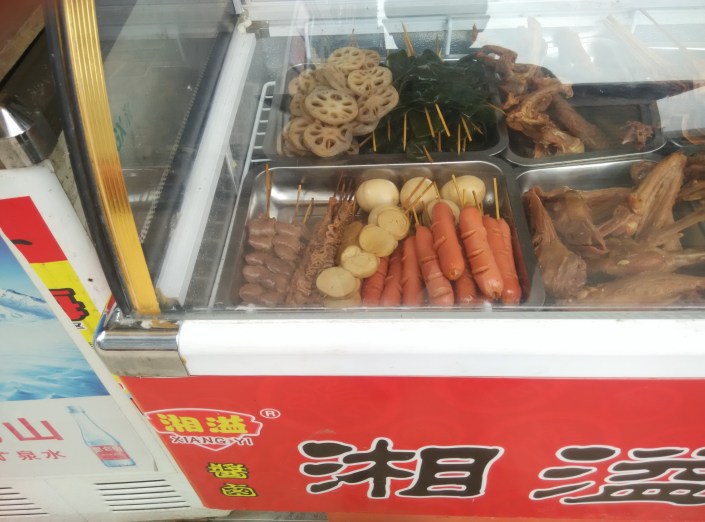
The duck hearsts are in the bottom left corner but if you take a look you can see a couple other interesting things. There are also duck legs, tea eggs, lotus root, and seaweed amongst other things. Not your typical western cuisine to say the least!
Despite what it may sound like though, duck hearts are delicious. They are also very cheap, only 2RMB (~.32 cents USD) per skewer. However, though cheap, they are not exactly pleasing to the eye!
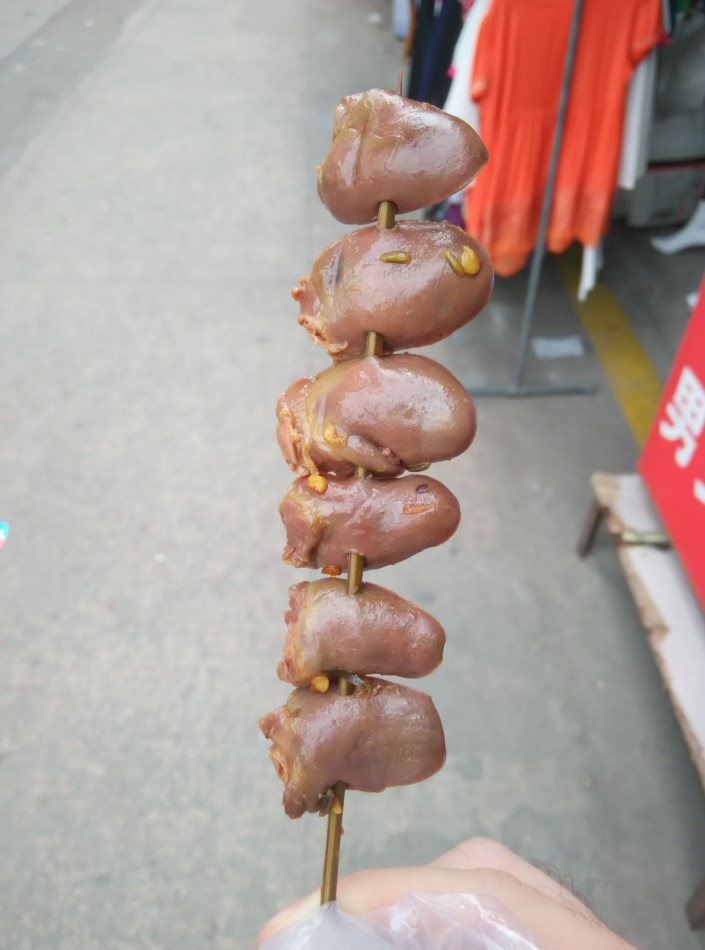
Upon eating this skewer of duck hearts, I have a few comments. Number one, yes they are actually very tasty. However the idea that you are eating the “heart” of something is a little bit disturbing and is kind of hard to get your head around. Once you bite into it you are thinking “Hey, not bad!” but your mind is also thinking..”I’m eating the f**king heart of something..” so your body is not exactly sure how to react. Anyway, to describe the taste, it does taste like duck meat somewhat but the texture is very different. Duck heart is very firm and slightly chewy, but not too chewy. The heart was also a bit salty, since it was likely a preserved heart that they salt beforehand. To be honest, I was a lot more afraid of eating the pi dan (The century old egg in a post from last week) than this one. I give this strange snack a thumbs up!
Please do have a look at the actual tasting video, which can be found on my YouTube channel here (Subscribe if you like the video!):
Eating Guangdong food at Wuhe, Shenzhen
Yesterday I went down to Wuhe, an area near the Bao’An district in the city of Shenzhen. Wuhe is a cool place, there are a lot of street food and restaurants there and the area has a very homey feeling to it. Instead of opting for ultra-cheap street food which I have done in the last couple articles, I thought we would kick it up a notch and go to more of a full service Guangdong restaurant. This was nothing fancy by any means but we had a number of dishes and the total bill was still only 57 RMB (A little less than $10 USD)


While looking at the menu, my girlfriend propositioned me and told me that I should try a century old egg, also known as a pi dan, 皮蛋. I was very intimidated and worried that the food was unsafe to consume. After doing relatively thorough research on whether the food was safe to eat, I discovered that despite its various nicknames, it is not actually one hundred or a thousand years old. The eggs are preserved and fermented using ingredients such as wood and ash for weeks, or months. After confirming that the food was “perfectly safe” to eat, we decided to order that and some other dishes as well. Here is the picture of the entire, modest meal.

So let me describe the rest of the dishes for you. On the far right is zhu rou zheng mi fen, 豬肉蒸米粉, which is a steamed rice noodle dish with pork covering the top. Directly next to that is jian jiao (煎餃子) also known as fried dumplings. These particular dumplings were filled with mushrooms and pork. In the smaller dish to the left of the jian jiao is the pi dan (The century old egg I was just talking about) and above that dish is tang cu yu kuai (糖醋魚塊) which is fried and battered fish covered in a sweet and sour sauce. Not pictured here is ji zhua, also known as chicken feet (鸡爪) as the waitress was taking a long time and hadn’t served that dish yet. I guess I forgot to capture the picture when it finally did come. Oh well. However, you can definitely see it in the new video I just uploaded to my YouTube channel talking about this very lunch! Check it out here:
The steamed pork noodles were good – the noodles were sort of chewy and the meat was nice and fatty. No complex flavors, but it’s also not a very complex dish. The fried dumplings were great, as they always are, and I love how when dumplings are fried, though it isn’t good for you, it always makes the outer part of the dumpling nice and crispy. Coupled with that lajiao that had vinegar in it turned it into a wonderful, sour yet spicy flavor. I am not a huge fan of chicken feet because of the bones but this chicken feet was very good. It was also covered in pickled peppercinis, a feature I really enjoyed. The fish was the only lacking dish out of the rest. The fish was full of bones when they told us there weren’t any (Pretty typical in China, though) the fish wasn’t crispy at all, and honestly didn’t have that much flavor. It wasn’t terrible, but not very good. And finally, the moment of truth came when I would sample my first pi dan, the century old egg!
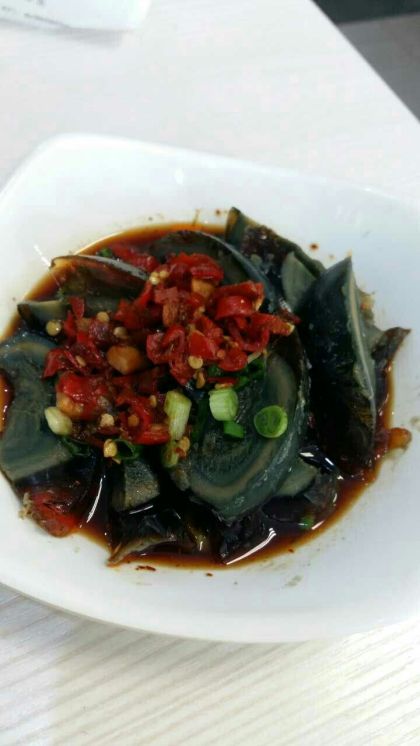
I was more nervous than anything to take my first bite of this aged egg. I felt better when I learned that it is not actually years old but only weeks to months. When I took my first bite (Video linked to my YouTube channel!) I was pleasantly surprised. What I tasted was much more pleasant than I had ever believed it would be. It tastes a lot like a salted duck egg but (Thankfully) not nearly as salty. I also noticed it had a very creamy texture, that is actually very delicious. It sits in a broth with soy sauce and vinegar and is covered in diced red chiles, and sliced green onions. The sauce gives quite a bite to the egg overall. In conclusion, I was very surprised that I didn’t wince at the first bite!
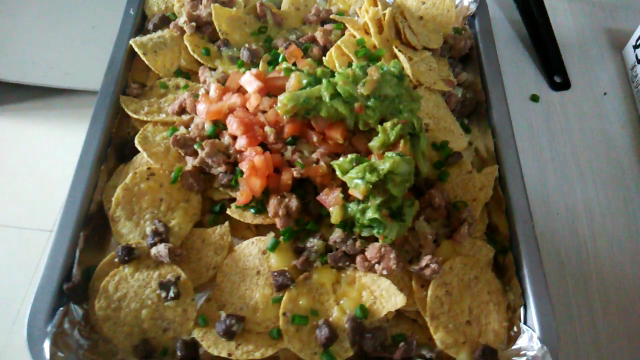
That’s all for today, but I’d also like to leave you with Episode 4 of my cooking show, The Laowai Chef. On episode 4 I made some Mexican food, Steak Nachos with Guacamole. Check it out!
Enjoying pork noodles in Dafen, Shenzhen
It’s been a rainy week here in the city, though I have been enjoying it. Today is a Saturday in Shenzhen. Overloaded rush hour metros, muggy transitioning-summer weather and odd smog patterns.
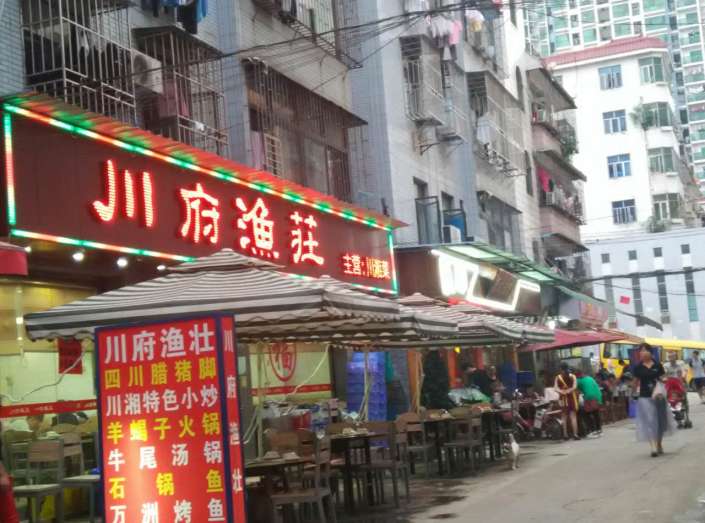
Today I was in such a rush I went without a breakfast. I even went without a lunch. It was a busy, busy day in China but at some point I managed to get myself out of the house for a meal. I went no farther than 120 meters from my door for a very typical all-meal-dish I know of as “zhu za tang fen ” or pork noodles, 猪杂汤粉.
What you have in this dish could be a number of different kinds of Chinese noodles (rice, flour etc), boiled with pork meat (undoubtedly some bones for extra flavor) and lean meat at that.
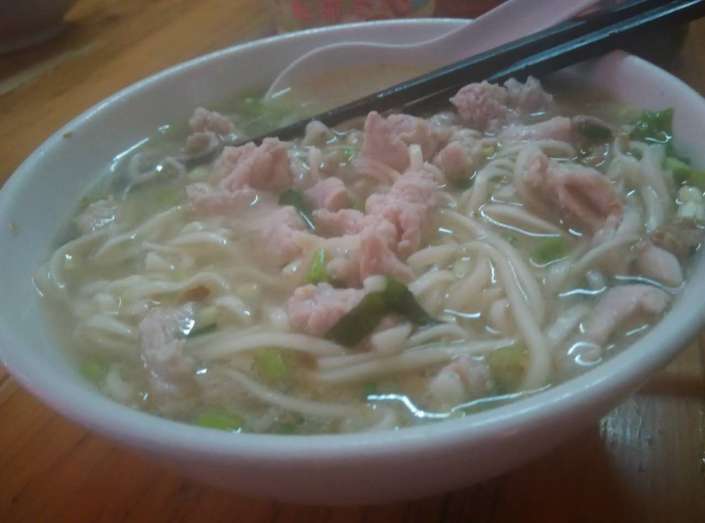
Also included are green onions, possibly some cilantro, and of course on option a dash of lajiao! (Chinese hot sauce, 朱杂汤粉)

Of course, taking the first bite is always the best part. There is nothing better than a bowl of protein packed, spicy meaty noodles.


So let’s talk about what we are looking at here in terms of taste and value. The cost for each bowl of noodles (I had a friend with me) was 20¥ for the pair. Let me confirm on that ambiguous figure. It was 10¥ for 1 bowl. That is ~$1.70 a bowl. That is about ~$3.50 US for a meal for two people. Shockingly cheap, refreshingly tasty! So we know the value is great, what about the taste? I can tell you that it is excellent and you would have a VERY difficult time finding something for even 2 or 3 times the cost of here. What you get when you get a bit of everything is (Meaning noodle, meat, and broth) an incredibly cheap yet flavorful experience. Zhu mian is a very common dish in China, very affordable, and very delicious. I consider it relatively healthy because it’s not fatty pork meat, and the noodles are not fried and the nutrients coming from bone-broth are numerous. In fact, it’s so good you end up with a picture like this:
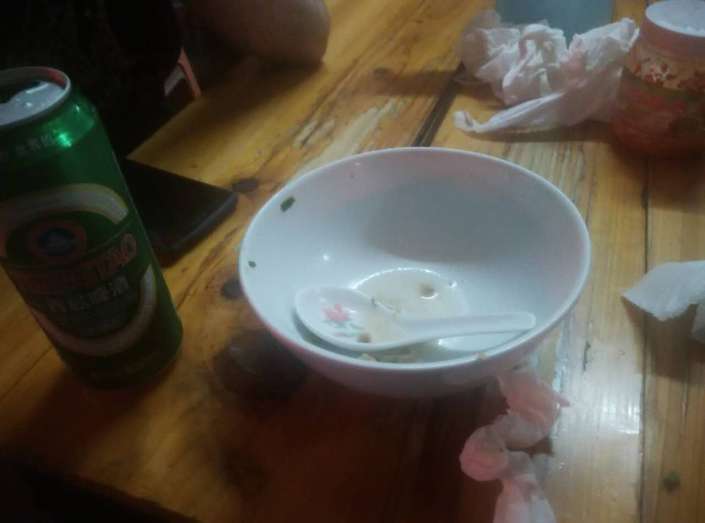
On a Saturday evening, I couldn’t be more satisfied to have a thrifty meal in China. Weekends are often times very tempting to go out and spend a lot of money on a fancy western meal, but if you are willing to stay in the Chinese cuisine, dinner can be very cheap.
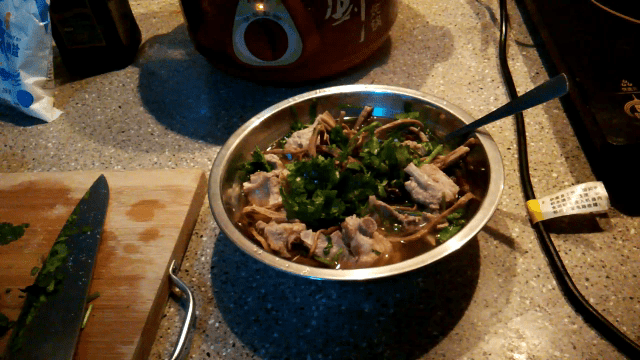
I’ll close this evening’s post with a similar recipe to tonight’s dinner: zhu zha tang fen, pork noodles with cilantro and mushrooms, or 排骨蘑菇汤 which is a recipe on my YouTube channel.
What’s for breakfast in China?
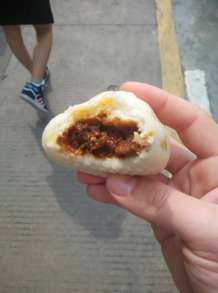
Good morning guys. It’s about 10:47AM in China here, which means back home in California it’s 7:46pm. I woke up just awhile ago and had to make a trip to Wal Mart, so I grabbed some breakfast on the way. In China, it’s very common for people to work long hours and thus have less time to cook. So often times, people will take their breakfast togo, which is what I did this morning. As I got outside my apartment building (I live on the 21st floor) I stopped at one of the storefronts about 50 steps from my door. I picked up 4 niurou baozi. Before you become afraid of the name let me explain: “beef stuffed bun” is the literal translation here. Baozi, or 包子, is referring to a very common stuffed and steamed bun that many Chinese people eat for breakfast. The baozi can have pork, beef, vegetables, sweet potato, and a variety of other ingredients. My favorite buns would have to be beef buns, and of course barbecued pork buns which is a very famous Chinese food. I purchased 4 buns at 1.5 ¥ each, (~$.25 USD) threw them in a bag and took them daobao (to-go!) I went to Wal Mart to buy a few ingredients for a dish that I plan on cooking later this afternoon for a new addition to The Laowai Chef.


As I proceeded to make my way over to Wal Mart I bit into one of the beef buns. Very delicious beef bun and this store front is one of the few that actually does beef buns. Most small breakfast fronts do a variety of buns but usually do not have beef. I don’t know what the quality of the meat is like, probably not great in reality but the taste is phenomenal. A very savory and salty blend, nice texture, and very filling. Just 2 small buns was enough for my breakfast today, that’s about ~$.50! Have a look and check out that inner deliciousness!
That’s it for now but I’d like to also leave you with a link to episode 2 of my cooking show: French Bread Pizza! Take a look at the final product! 😀

- ← Previous
- 1
- 2
 Ian in China - Living in China content, Asia food and travel videos!