
Guangdong
Eating baozi (包子) and skateboarding in China
This morning I went down the street near the metro station at Dafen to grab some baozi and jump on my skateboard for the first time in a VERY long time. I talked about baozi already before in my first blog post, “What’s for breakfast in China?” but I wanted to take a video for this post, so I thought I would bring them back. Also the first baozi article I did was on beef baozi, and today they were pork!
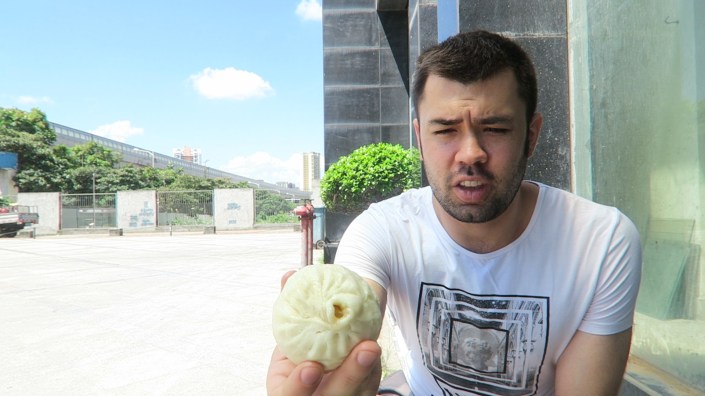
The baozi is a very traditional and one of the most common things that Chinese people eat for breakfast. This particular baozi was full of stuffed pork (Which was fatty and greasy, which is a little heavy for the morning but that’s why you don’t eat too many!) and also some cabbage, if I recall correctly. 1 of these baozi only cost 1 RMB, or $.15 USD so my breakfast only cost $.30 since I had two. That baozi was more than enough fuel to give me the energy I needed to pull off a few skateboarding tricks.
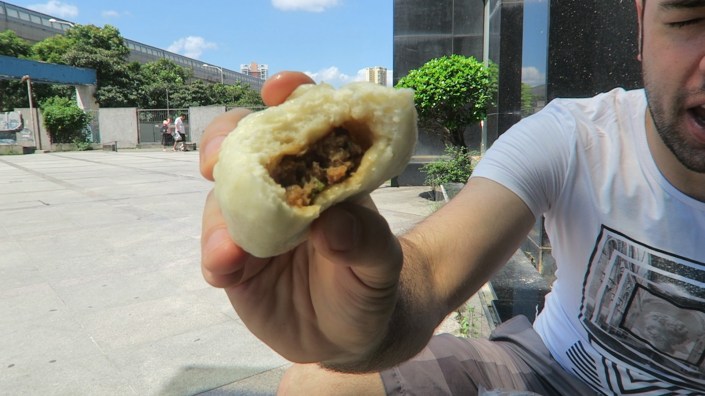
As I proceeded to bite into the delicious baozi, something insane happened. The fatty pork juices dripped out, and nearly landed on my shorts! Luckily I was quick enough to recover, only having to explain to the camera what had happened with my mouth open and simultaneously full of baozi. A baozi stain is no fun – I assure you and I am happy I avoided it. Those juices however, are delicious so I highly recommend taking a more full bite and making sure you get the juice with it! After finishing those delicious baozi, it was time for some skateboarding. I used to skate a lot in my younger years (13-20 years old) but pretty much stopped shortly after high school. However, it’s still fun to roll around and do some tricks sometimes!

An enjoyable morning it was, though hot! By the time I was done skating, I was absolutely drenched in sweat. Nevertheless, please be sure to check out the breakfast video from this morning, which also comes with a little bit of skateboarding attached! What do you think of baozi? Let me know in the comments!
Chang fen: A Chinese breakfast staple
This morning I returned to my local laoban to do a Chinese food video about breakfast. Today we had chang fen (肠粉) which is a common breakfast dish made with rice paste, eggs, vegetables, and ground pork covered in a pork fat broth with soy sauce and chopped garlic. I probably have chang fen at least once a week living here. I find it to be a relatively healthy option – as this is steamed and not fried, and I enjoy eating as healthy as I can.
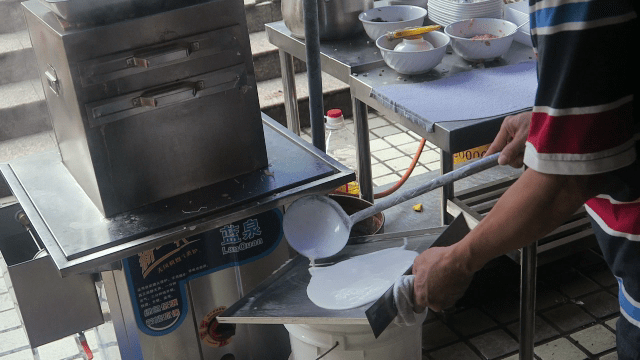
To make chang fen, a large multi-layer steam rack is used. Generally they start by pouring rice paste and covering the tray with it, and then adding ground pork, a few vegetables and cracking an egg or two on top. The mixture is stirred around and sent into the steamer for less than a minute. When it comes out, it is scraped off and set onto a serving plate.
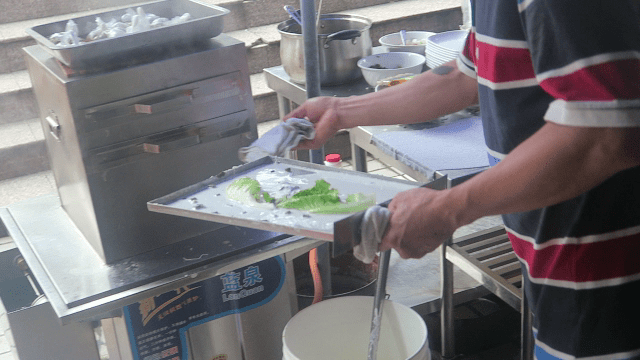
When it comes out, it is quite a pretty sight to behold. The taste of chang fen is interesting to say the least. The texture is sort of a thin jello-ey texture that without the sauce is not exactly bursting with flavor. Rice paste is of course made of white rice, and as we all know white rice has a fairly brand and neutral flavor. However when it is coupled with vegetables, meat, and a nice pork broth with garlic and some chili sauce on top, the flavors go a million ways! The pork broth gives a rich decadent flavor especially when you get those chunks of ground pork in the bite. Grasping some chopped chilis with your chopsticks in a bite adds a spicy aspect to this dish as well.

I also blogged about chang fen back in April, you can see that post here: Chang fen: A cheap, delicious and exotic breakfast in China. Don’t forget to check out the video from this morning’s breakfast which includes video of the cooking process and tasting, from my YouTube channel! Please like/subscribe if you enjoy the content!
Finding bargains at the Temple Street Market in Hong Kong
Last week we had an excellent day trip to Hong Kong to get our mainland China visas stamped. While we were there we went to two locations: Chungking Mansions (Which is described in my last blog post) and also the Temple Street Market. Today I want to talk about the market. It was my first time visiting it and I was more than blown away!
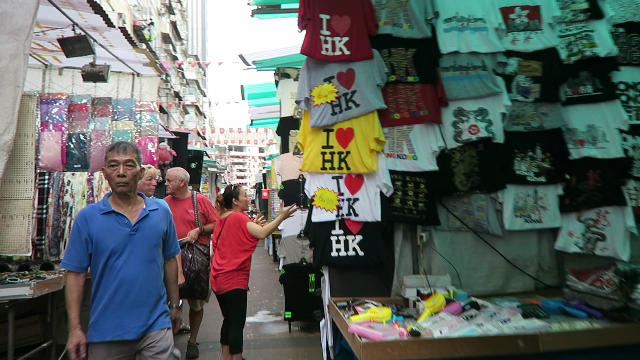
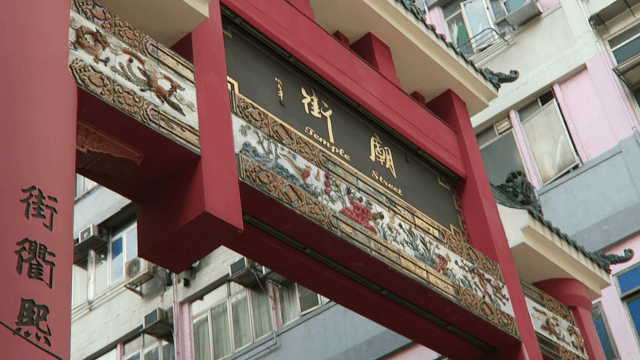
Getting to the market is very simple. From Jordan Station, take Exit A and turn right onto Jordan Road. Walk down and take another right onto Temple Street. Once you find the market, the entrance is marked by big temple-like gate, and the other side also has an identical gate that signals the end of the market.
It takes about 7 minutes to walk through the market at a brisk pace, but you will be surprised how fast time flies when you start seeing the deals you can get. It may take only 7 minutes to walk through, but by the time you get to the end I bet at least an hour will have gone by! More than likely, you will also have found at least one deal on fashion merchandise that you can smile about!
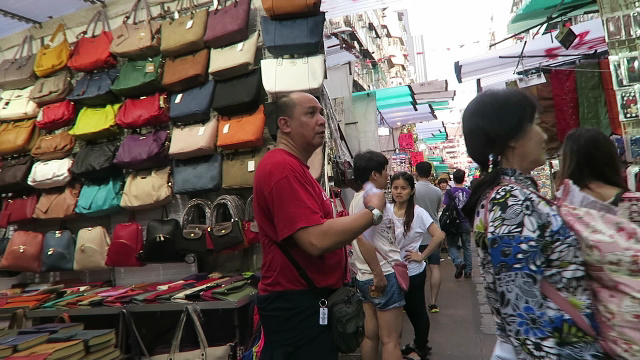
After I finished walking through the market I hopped on the metro back to Lo Wu station to cross the border into Shenzhen to return home. However, I didn’t come home empty handed! Here’s what I managed to wheel and deal out of the market:

I bought three high quality (100% cotton) t-shirts with brand name logos on them for an excellent price. The vendor lady asked for $204HK (USD $26) for the trio but I got her down to $140HK, (~USD $16) which is about a 30% savings, around $10 usd. Overall, I couldn’t be happier with my purchase, and I hope to return soon! Check out the walk through I did at Temple Street on my YouTube channel!:
Making a delightful spicy chicken stir fry at home
Today after working out at the gym I needed a protein-jammed recipe and of course the go to food for that is chicken breast. So I created what I call a spicy chicken stir fry, behold it in its gain-fueling wonder.
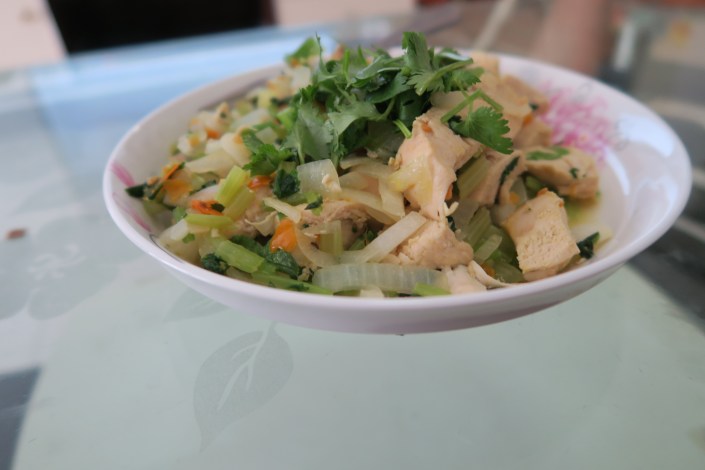
So how to make such a delightful and tasty dish? Here are the ingredients:
Ingredients:
- 2-3 bunches of cilantro, chopped.
- 2 big bunches of celery
- 1 white onion chopped.
- 2 tablespoons of Chinese lajiao (Chopped pepper chile sauce)
- 2 chicken breasts
Take 2 frozen chicken breasts and boil them in water for about 10 minutes to thaw and partially cook them. While they are boiling chop up the vegetables. When the boiling is done, remove the chicken breasts from the pot and slice them into chunks. Then add some olive oil to a frying pan and heat it up for about 30 seconds. Add the chicken, and add the vegetables and stir together to coat in the oil. Cook for 5 minutes, stirring occasionally. Next, add a couple scoops of lajiao and mix well to get the lajiao well distributed. Transfer the stir fry to a plate and garnish with chopped cilantro. Eat and enjoy your daily protein. Please have a look at the recipe video below!
That’s all for today, but stay tuned for some interesting videos from Hong Kong, later this week!
Eating fried noodles in Shenzhen!
Today I went to another local laoban that we frequent to order some pidan zhou – Which I have already written about in this blog before, a few weeks ago. Unfortunately they were sold out of the zhou, so we had some chaomian (炒面) instead. Chaomian are high heat wok fried noodles with eggs, pork, and vegetables added along with some spices.
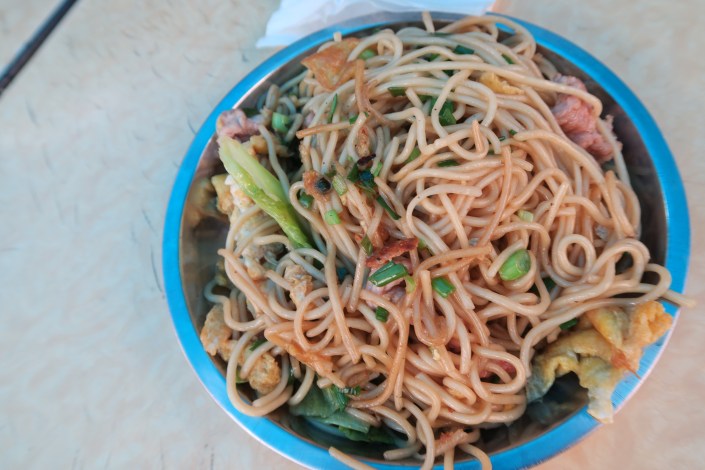
These people are very nice and we frequent their establishment at least a few times a week. Today I asked if we could film them cooking and if they would do a little quick sit down interview with us. They agreed.

Chaomian can be hit or miss in China. I have had great chaomian, and totally lousy chaomian. Of course you can guess that this particularly lady does the chaomian just the way I like them – with 2 eggs, pork, and vegetables added. The end result is an absolutely delicious dish you would very rarely find back home in America, and no, Panda Express does not cut it. Check out the video below to see the cooking, tasting and interview with the laoban.
Hiking Wutong Mountain outside of Louhu in Shenzhen
A few days ago I went with my expat American friend Loren and his brother to Wutong Mountain (梧桐山) which is a small mountain village outside of Louhu in Shenzhen. The village is home to one of the most beautiful mountains I have ever had the pleasure of hiking in my life. Wutongshan is a rainforest-esque climb chock full of bamboo, wild birds chirping, torrential waterfalls and an absolutely breathtaking view of Shenzhen and Hong Kong at the summit.

It’s not an easy climb, either. In fact, Loren’s brother had to turn back about halfway up the mountain because he was too tired to continue. When I came to Shenzhen about two years ago and weighed 50 pounds more, I also could not complete this climb. There are seemingly endless sets of stairs that just keep going higher and higher.

Probably the coolest part about the hike is the myriad of beautiful waterfalls you will experience (Provided you take the stair route – if you decide to just walk up the road to the summit base, you may not see any waterfalls)

There are points where you have to practically rock climb to keep going. Once you get to the summit however, it’s pure bliss and satisfaction as you observe one of the most beautiful views I have ever seen in China.

Overall, I have hiked this mountain 3 times all the way to the summit now and it is an incredible workout, full of breathtaking views and an amazing way to get into nature in Shenzhen. Check out the full video of our hike complete with music below!
Walking around Laojie’s (Dongmen) food street in Shenzhen
Last night was epic! We took the MTR train from Dafen to Laojie (8 stops, about a 15 minute ride) which is home to some of the best shopping and food in Shenzhen. For my YouTube video channel I made a video sampling a few foods, and touring around the area.
Laojie is a beautiful place. Lots of beautiful women, amazing street barbecue and other foods, what could be sweeter? After getting off at exit D with a couple friends I met up with my girlfriend and we started walking around. I apologize for the low quality pictures, I was filming most of the time and I completely spaced out on taking some high res photos! These are all video grabs from this week’s video:
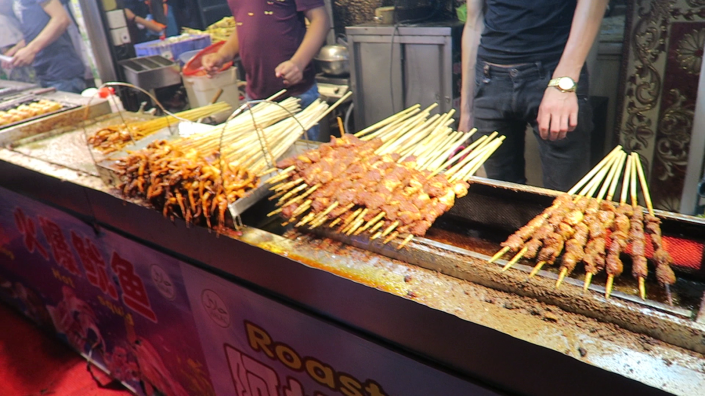

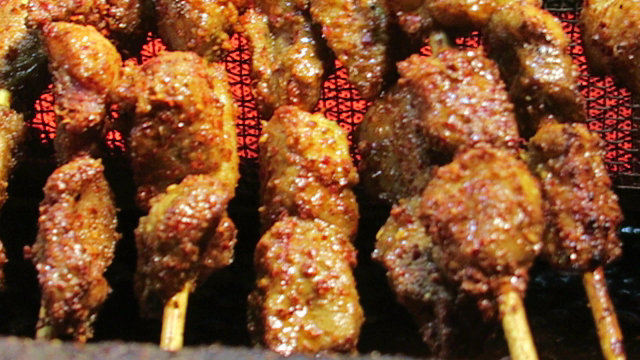
I hadn’t been to the food street that many times so we got lost for a couple minutes, but we found it pretty quickly. While walking there, we ran into an outside barbecue that was serving up youyu ( 鱿鱼 , squid), and yangrou (羊肉, lamb). We couldn’t resist the temptation and we all got a few skewers. The barbecue is well priced, too. You can get 4 skewers of squid for 10RMB ($1.50 USD) or 2 skewers of lamb for the same price. The squid was nice and chewy not overcooked, with lots of spices added. The lamb was delicious and fatty, and for me that’s great because I love animal fat. (Not in excess, of course!)
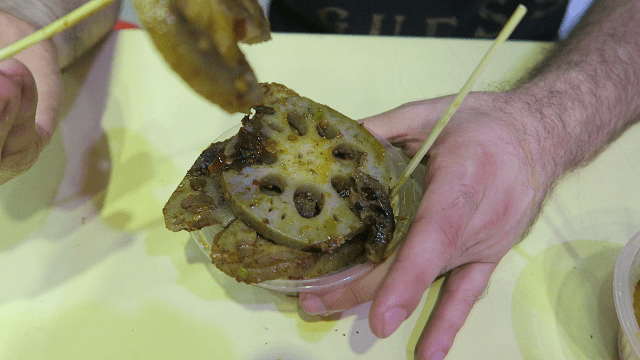
After devouring our skewers, we headed off to the food street. We got there around 9:45 which is pretty late for laojie. Although it is very easy to find street barbecue going until 3-4 in the morning in Shenzhen, Laojie is a bit of a different case. Around 10:00 it appeared that lots of vendors were starting to close down, but lots of people were still serving until we left (Around 10:45) I bought some lotus root (藕片) and some potatoes. There isn’t much to say about the potatoes except that these ones were actually a little bit overcooked (These were leftover at the end of the night) but still pretty tasty. However, they were a bit too salty. The lotus however was very good. Lotus has a really interesting texture and it is probably the crunchiest vegetable I have ever eaten. It’s somewhat comparable to the crunchiness of an apple.
After walking around a bit more and having some delicious leng mian (Cold noodles, 冷面 ) we decided to take the train home since it was early enough (The train stops around 11:30 and it was only around 10:45) and called it a night. Please check out the video of the food crawl below, and if you like it please feel free to subscribe to my channel 🙂
Chongqing noodles: Spicy and delicious!
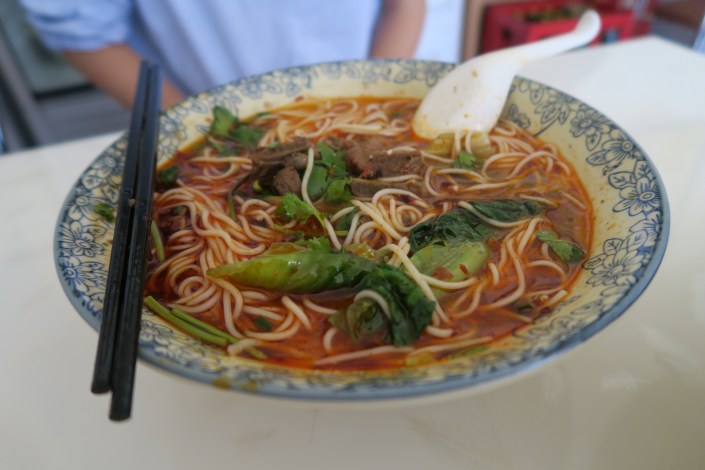
Today while walking around Dafen my girlfriend Maggie and I stumbled upon a restaurant from Chongqing, a city about 1500 kilometers northwest of Shenzhen. The laoban was serving Authentic Chongqing noodles so we decided to have a try. I ordered ma la xiao mian (麻辣小面, pungent and spicy noodles) and Maggie ordered paigu xiao mian (排骨小面, pork rib spicy noodles)
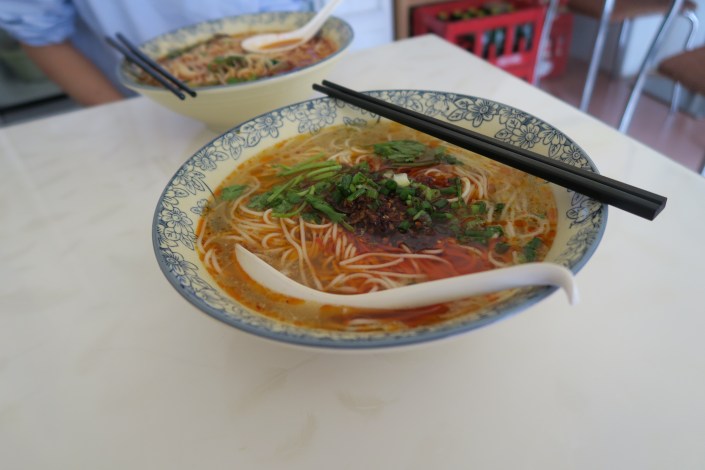
The laoban was a very nice guy. He allowed us to film him cooking the noodles and even sat down with us and had a quick chat. In the video, he boils the noodles and adds them to the soup broth. He then adds a number of things. He adds some chili powder, lajiao, a little more broth, green onions and cilantro. Maggie ordered paigu which has meat in it, so he added some pork ribs to the dish as well.
Upon trying these noodles for the first time, here are my thoughts. The noodles were not too chewy, which I really like, very easy to eat. The sauce and dish overall is pretty spicy. You can taste a lot of chili oil in there and the bite you get from the lajiao is not a normal spicy. It has almost a citrusy sour flavor to it. It sort of reminds me of hot pot, but it’s not really the same thing. The greens (green onions and cilantro) do a lot to enhance the look and flavor of this dish as well.
That’s all for today’s entry but be sure to check out the video for this afternoon’s lunch on my YouTube channel:
Cooking up some Chinese style carne asada!
Today is Sunday, our day of rest. Of course for me, it’s always a day of cooking, too. Using my new Canon G7X I filmed a recipe for tudou niurou, 牛肉和土豆, or beef and potatoes.
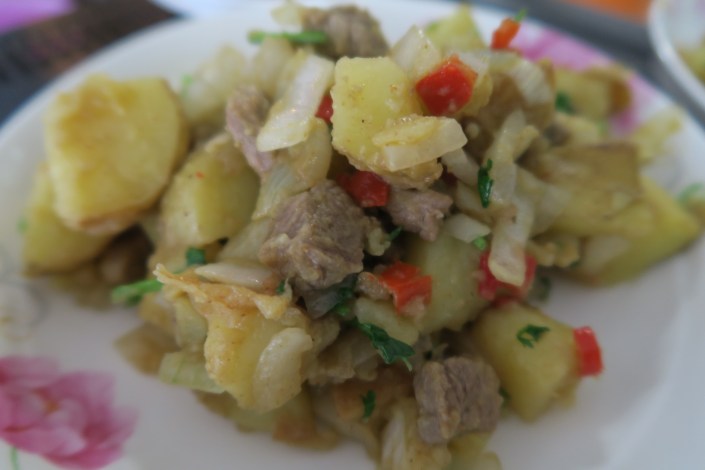
The recipe itself is very simple, and the ingredients are few:
- 5-6 medium potatoes with the skins included
- 350-500g cubed beef
- Garlic powder
- Red pepper
- Cumin
- Salt
- 1 whole onion chopped
- Cilantro (optional)
- 2 teaspoons Chinese lajiao (拉脚) OR
- 2-3 red chili peppers chopped with seeds
Directions: Cut the potatoes in cubes and cut the beef into smaller cubes, like the size of what you would see in a Mexican style burrito. Add olive oil to pan and let it heat up for 10-20 seconds. Add potatoes, stir to coat in oil, then leave for 10-12 minutes minimum. While the potatoes are cooking, slice the beef and the whole onion. Also, add 2 teaspoons of lajiao or 2-3 chopped red chili peppers at this time. After potatoes have been cooking for 12 minutes, add the beef and spices. Stir, and allow to cook for 5 minutes more. After 5 minutes goes by, add the onion and some more spices if desired and cook for 3-5 moe minutes. Add in chopped cilantro at the end and stir it in. Serve and enjoy!
Check out the recipe on my cooking channel below!
How to make 猪肉包子, Chinese steamed pork buns.
Today my girlfriend Maggie and I did an authentic Chinese recipe for 猪肉包子, or pork steamed buns. If you recognize the name, baozi, the first article on this blog was written about niurou baozi from the streets. We decided to make some at home, but with pork.
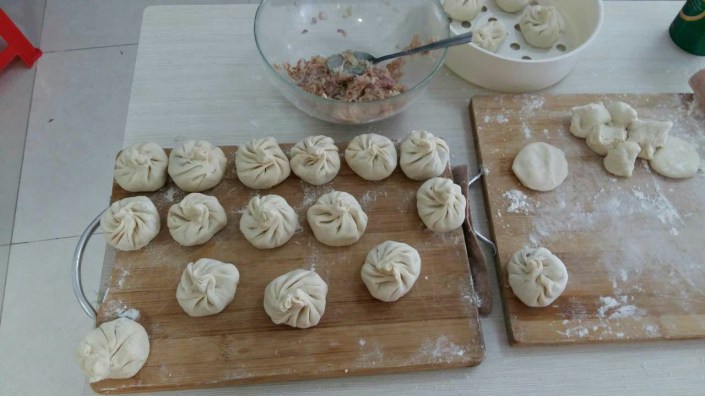
The recipe was quite a bit of work, but the end result was well worth it. Here is the recipe:
Ingredients:
- 1 large leek (chopped)
- 1 kilogram ground pork (You can use less, this is enough for about 30 baozi
- Salt (About 1 tsp)
- Soy sauce (2 cap fulls)
- 1 onion chopped
- 3 cups of flour
- 1 cup of water
That is everything for the baozi, but we also made a nice pungent dipping sauce to go with it which is very easy to make and only has 3 ingredients:
- 2 pieces of garlic chopped
- Soy sauce
- White vinegar (1 tsp)
To see how to make this recipe, check out the video on my cooking channel!
 Ian in China - Living in China content, Asia food and travel videos!