
laoban
Eating fried noodles in Shenzhen!
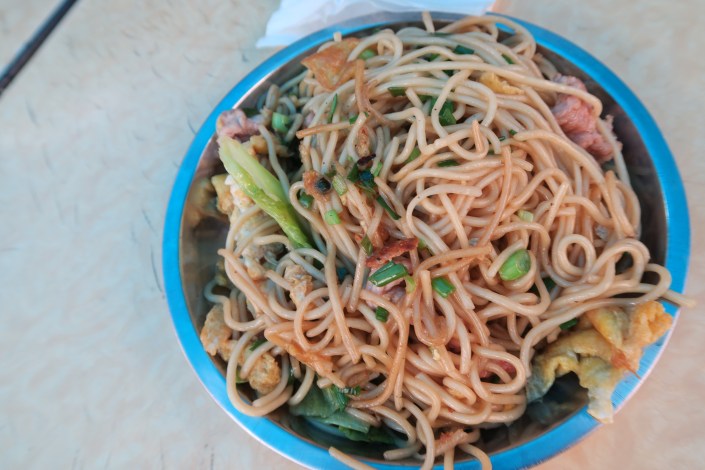
Today I went to another local laoban that we frequent to order some pidan zhou – Which I have already written about in this blog before, a few weeks ago. Unfortunately they were sold out of the zhou, so we had some chaomian (炒面) instead. Chaomian are high heat wok fried noodles with eggs, pork, and vegetables added along with some spices.
These people are very nice and we frequent their establishment at least a few times a week. Today I asked if we could film them cooking and if they would do a little quick sit down interview with us. They agreed.

Chaomian can be hit or miss in China. I have had great chaomian, and totally lousy chaomian. Of course you can guess that this particularly lady does the chaomian just the way I like them – with 2 eggs, pork, and vegetables added. The end result is an absolutely delicious dish you would very rarely find back home in America, and no, Panda Express does not cut it. Check out the video below to see the cooking, tasting and interview with the laoban.
Chongqing noodles: Spicy and delicious!
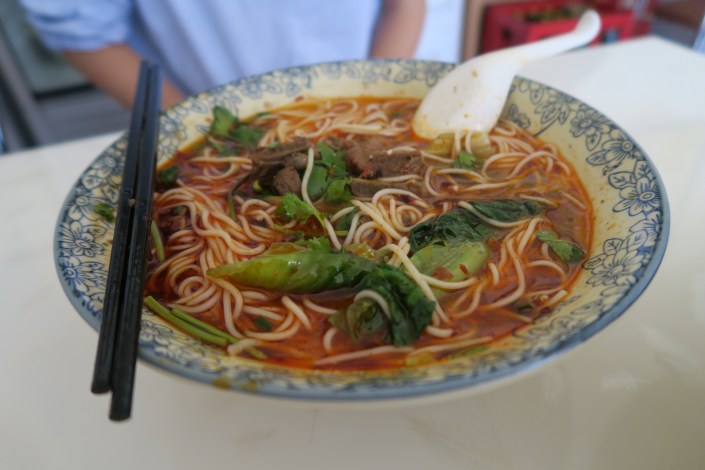
Today while walking around Dafen my girlfriend Maggie and I stumbled upon a restaurant from Chongqing, a city about 1500 kilometers northwest of Shenzhen. The laoban was serving Authentic Chongqing noodles so we decided to have a try. I ordered ma la xiao mian (麻辣小面, pungent and spicy noodles) and Maggie ordered paigu xiao mian (排骨小面, pork rib spicy noodles)
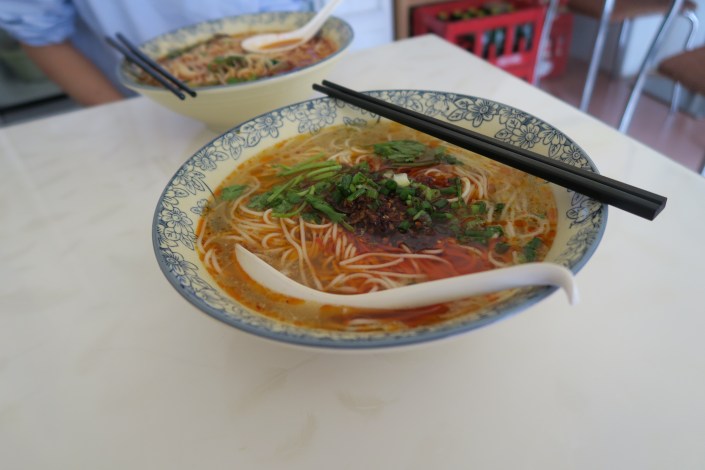
The laoban was a very nice guy. He allowed us to film him cooking the noodles and even sat down with us and had a quick chat. In the video, he boils the noodles and adds them to the soup broth. He then adds a number of things. He adds some chili powder, lajiao, a little more broth, green onions and cilantro. Maggie ordered paigu which has meat in it, so he added some pork ribs to the dish as well.
Upon trying these noodles for the first time, here are my thoughts. The noodles were not too chewy, which I really like, very easy to eat. The sauce and dish overall is pretty spicy. You can taste a lot of chili oil in there and the bite you get from the lajiao is not a normal spicy. It has almost a citrusy sour flavor to it. It sort of reminds me of hot pot, but it’s not really the same thing. The greens (green onions and cilantro) do a lot to enhance the look and flavor of this dish as well.
That’s all for today’s entry but be sure to check out the video for this afternoon’s lunch on my YouTube channel:
Zhou: A traditional Chinese porridge breakfast.
This morning I went down with my girlfriend to yet another local laoban at Dafen. For breakfast we had pi dan shou rou zhou (皮蛋瘦肉粥), which is a delicious rice porridge with pi dan (The century old egg which I have mentioned many times in this blog), a few assorted vegetables and some pork.
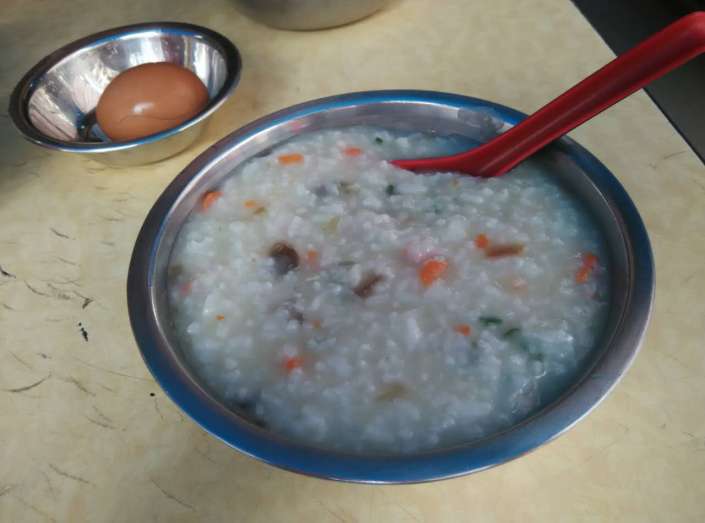
Not only do I absolutely love this porridge, it’s very cheap! At only 3 RMB a bowl, that is about a half dollar US. One bowl is also very filling. This is a very traditional dish that many people eat in Chinese villages throughout the country. This specific zhou however is a little different – many villages will just do a plain rice porridge with nothing else. This one is a bit of a “designer” porridge as it has pi dan and meat and vegetables added.


Let’s talk about the taste of pi dan shou rou zhou. There are a couple words I can use to describe it. Light, creamy, smooth and delicious! Normal rice porridge is well, let’s face it, kind of a dull meal, but Chinese people generally would eat it with a side mantou, 馒头, which is kind of a bread-roll, and vegetables. I mentioned before this is like designer zhou, sort of a fancy kind. The addition of the pi dan is excellent because it gives the zhou a really creamy and delicious flavor and texture. My personal favorite way to eat it is by adding some lajiao to it:
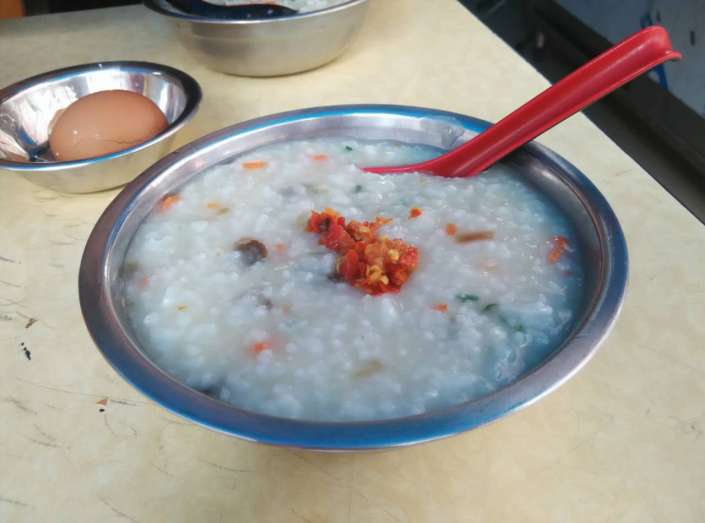
Overall, zhou is one of those classic Chinese breakfasts that is filling, cheap, and delicious. That’s about it for today’s entry but I’d like to leave you with Episode 7 of my cooking show: Lemon Lajiao Chicken!
Chaoshao: A sweet and delicious Chinese pork dish.
Today I felt like writing about one of my favorite Chinese foods. The Chinese are celebrating labor day weekend, so traffic in the city is out of control. I’m on the 21st floor but all I can hear are mass numbers of horns honking from the street below.
But that won’t stop me from updating the blog! Today we returned to our same laoban from last week, the one that makes killer 猪杂汤粉, pork noodles. We ordered our usual, the noodles, but also ordered a few other things as well. From a separate street stall we ordered 20 RMB worth (~$3.09)of some chaoshao, 叉烧, one of my favorite Chinese pork dishes.
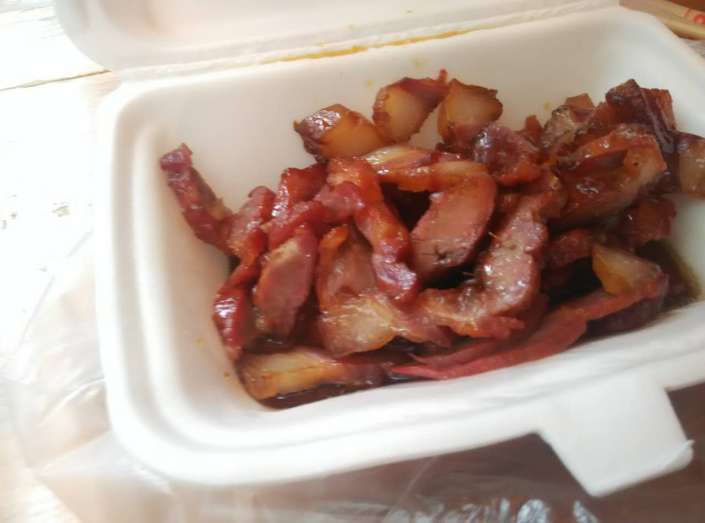
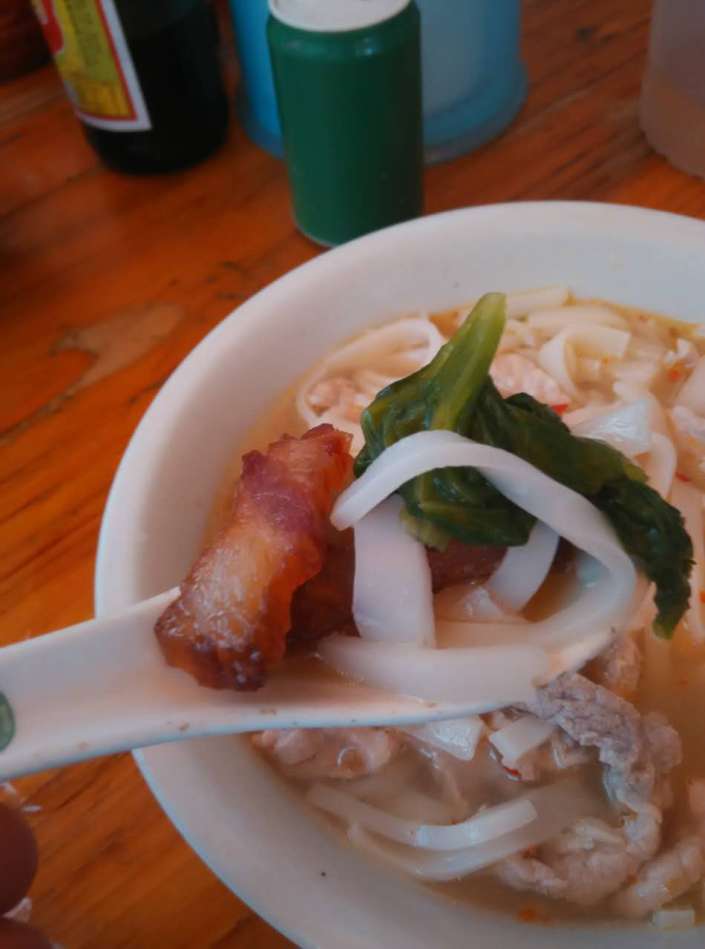
Chaoshao is basically Chinese style roast pork, covered in an incredibly sweet and flavorful sauce. The sauce contains things like soy sauce, spice powder, honey, ginger, garlic, etc. The pork meat is soaked in this marinade for many hours, and then slowly roasted over a cooking fire. Upon tasting this, your flavor receptors immediately go off. It is a great combination of salty and sweet, nice tender meat that isn’t dry. This meat is seriously, OUTSTANDING and I am sure could win awards back home. It’s so good we even combined it with our noodles.
From our noodle laoban we also ordered one other dish: 牛筋丸, or niu jin wan, also known as beef meatballs. The meatballs are 1 rmb each, at a combined cost of 10RMB for all of them (~$1.54)


The meatballs were absolutely outstanding. In China you will often find street vendors selling Chinese soups with vegetables where you can pick the things you want to add from trays (Vegetables, meats, etc) and have the laoban boil them together in a soup for you. Usually the meatballs and fish balls that you will find at these stands are processed factory foods with who knows what in them. I only order meatballs from this particular laoban because I know she does them fresh and from real beef. They were excellent.
When factoring in the cost of our entire meaty and delightful lunch, it only clocked in at 50 RMB, or about ~$7.72.
I’d like to leave you today with Episode 6 from my YouTube cooking show: The Tomato Herbs and Cheese Toasted Sandwich:
 Ian in China - Living in China content, Asia food and travel videos!