
Shenzhen
Kung Pao Chicken and Ox Tongue: Spicy Sichuan flavor feast!
Living in China affords access to all of the culinary wonders that is Chinese food. China has many provinces and each one has their own special types of cooking. Sichuan food is renowned for being very spicy and that is just like the meal we had today at a traditional Sichuan restaurant located in the Longgang metropolitan area of Shenzhen. It’s located at the corner of Longping W Road and Aixin Road in Longgang.


It is a very beautiful restaurant There’s even a coy pond with fish swimming around! It’s quite a sight. This is some of the delicious food we had:

The first dish we had is what we know of as Kung Pao Chicken back home, or 宫保鸡丁. This is chicken meat along with peanuts, dried chiles, and leeks fried in a high heat wok covered in a sweet and spicy sauce. This dish is absolute heaven. A lot of Chinese dishes have bones but this is the few that actually use pure chicken meat with no bones. The meat was soft and moist and literally falls apart in your mouth. The leeks give a nice onion essence and the chiles give it some serious heat. This dish is actually one of my favorite Chinese dishes ever, hands down. The next dish we had was a bit different, but still spicy as hell!
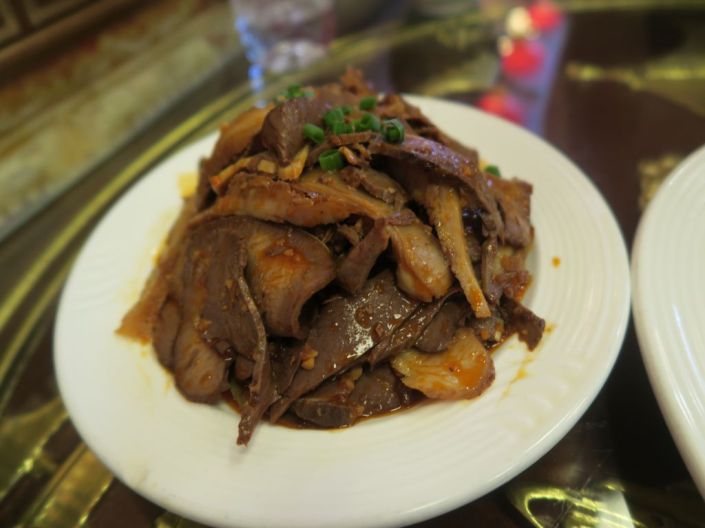
So this dish is called Fu Qi Fei Pian (夫妻肺片) which is sliced beef with ox tongue over a spicy chili sauce. This dish was served cold, but it sure is spicy hot! The tongue is nice and chewy which I really like and reminds me of tripe. It’s covered in a citrus style spicy chili sauce that compliments our other dish very well. Coupling a bite of tongue with the thinly sliced beef is a match made in heaven as you have chewiness mixed with moist tender beef.
So from tomorrow for the next week I will be traveling to Guilin from Shenzhen by sleeper train (It’s about a 13 hour train ride and I will be exploring much of that beautiful area! My blog probably won’t be updated for at least one full week, but when I get back, expect lots of interesting new Asia content! Don’t forget to check out this week’s Sichuan food meal, below:
Enjoying beef hotpot in Huizhou with LaoWhy86
This last weekend I took a trip out to Huizhou – a Tier 2 city in China that is just about a one hour bus ride from Shenzhen. I went there to meet my friend C-Milk, or more commonly known as LaoWhy86 on YouTube. We met at Huizhou’s finest beef hotpot restaurant for some drinks and a meal. The result was some delicious food, crazy Chinese baijiu and good times.
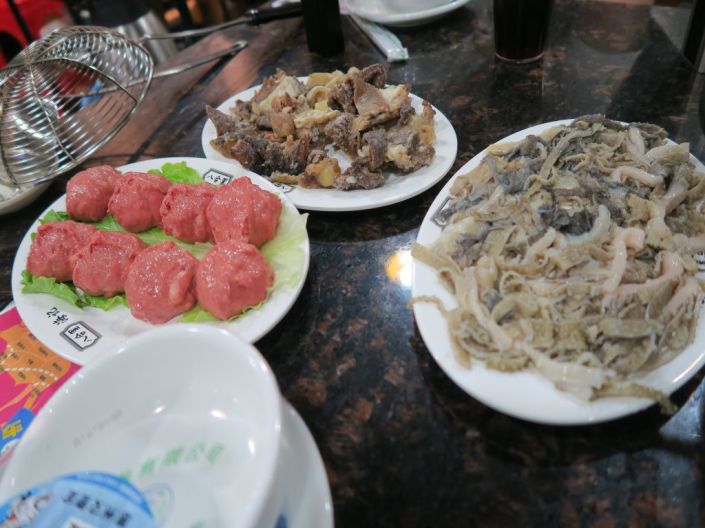
Pictured above are a few of the things that went inside our hotpot. This restaurant is well known for it’s beef and how they make their beef meatballs. Instead of grinding the meat in a grinder, they actually pound the meat for a continuous amount of time without actually cutting it, to make the meatballs. The meat is delicious, juicy, tender, and I found it to be bouncy and different than a western meatball.

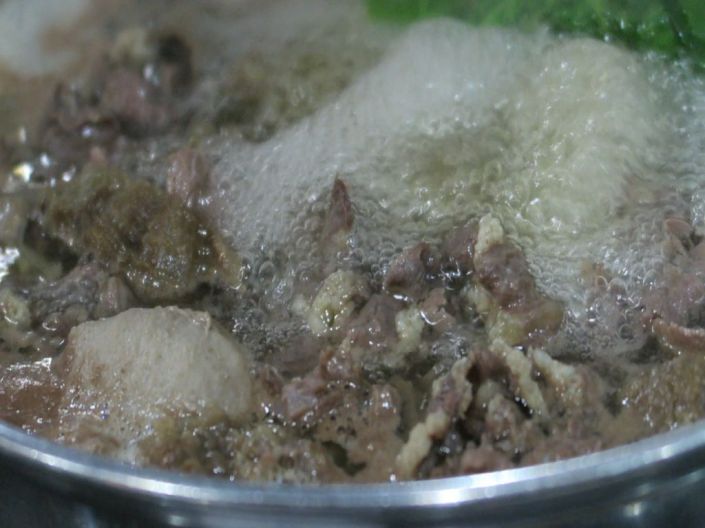
If you aren’t familiar with hotpot (火锅), I’ll fill you in a bit on how it works. There is a large pot of broth in the middle of the table (On top of a hotplate) that is generally filled with spices, vegetables, raw meats, chile peppers, etc and cooked until done. Once it’s done, you just take what you want out of the pot, dip it in your dipping sauce, and you are eating like a king. Hotpot is a little different than other styles of eating because you must cook your food first, but sometimes waiting for it makes it taste even better. Here’s a nice picture of mouth watering beef simmering in our hotpot.
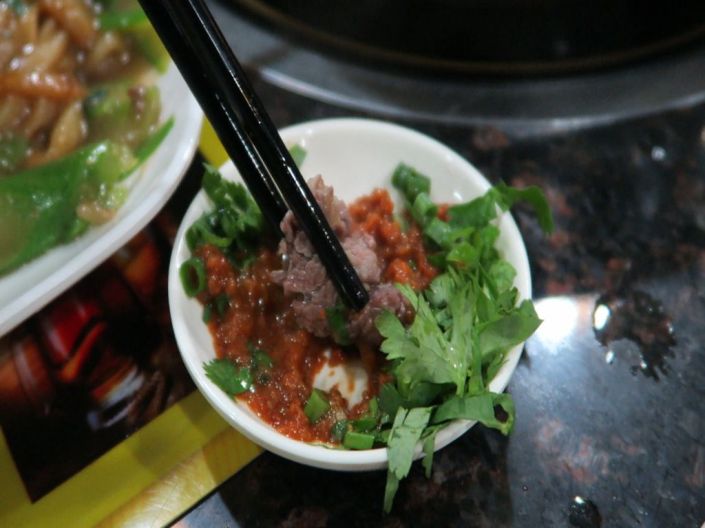
Now the dipping sauce was something out of this world, or so it seemed literally so! When I dipped my first strip of beef into this delicious dipping sauce, I was immediately reminded of a spicy mexican blended salsa. I tasted elements of tomato, cilantro and definitely some chile peppers!
We also ordered some incredibly delicious beef noodles (炒牛肉河粉) that tasted surprisingly creamy. It seemed to be covered in a sauce that reminded me a lot of western gravy, the style that you would put on top of mashed potatoes. It was a little different, but the noodles were sweet and delicious and the beef was nice and tender.
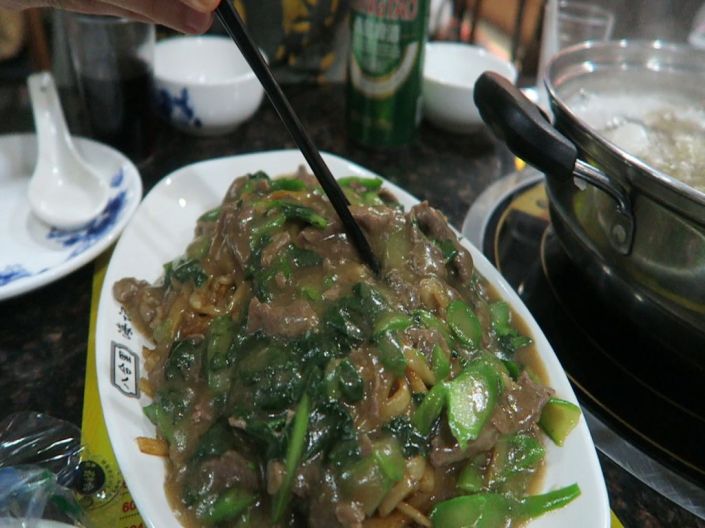
After a few drinks or ten of wine/beer/baijiu, we went back to my friends house for some arm wrestling. It was a good time to say the least!


Make sure to check out my video from this evening – I think you have to see the video to understand the scope of our experience! Don’t forget to check out my channel on YouTube and subscribe if you like the material!
Eating some late night Chinese Barbecue in Shenzhen
One of the coolest things about China is how vibrant things can be late at night. Of course, it depends what part of the city you’re in but in most parts, there is usually a late night area with street barbecue that runs into the late hours of the night, sometimes as late as 3-5 AM! It was about midnight last night when we developed some strong barbecue cravings, so we decided to head down to one of our local barbecue spots at Dafen here in the city of Shenzhen. Chinese saokao (烧烤, or barbecue) is absolutely delicious, and I intend to show you just how delicious! First, have a peek at some of the things we had to eat that night:
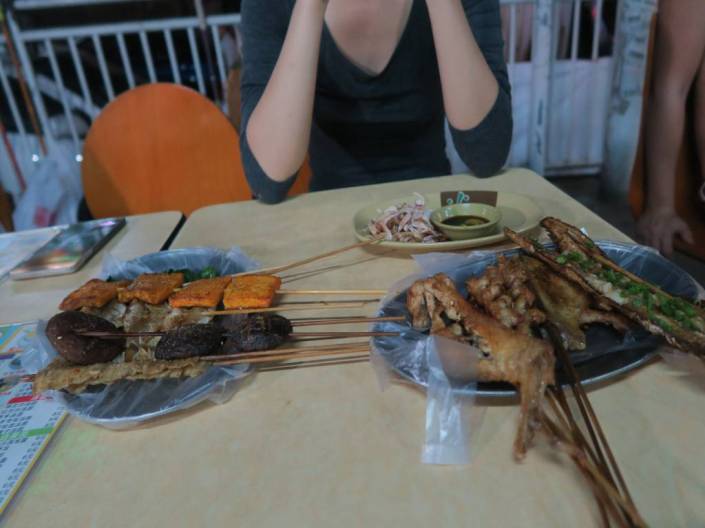
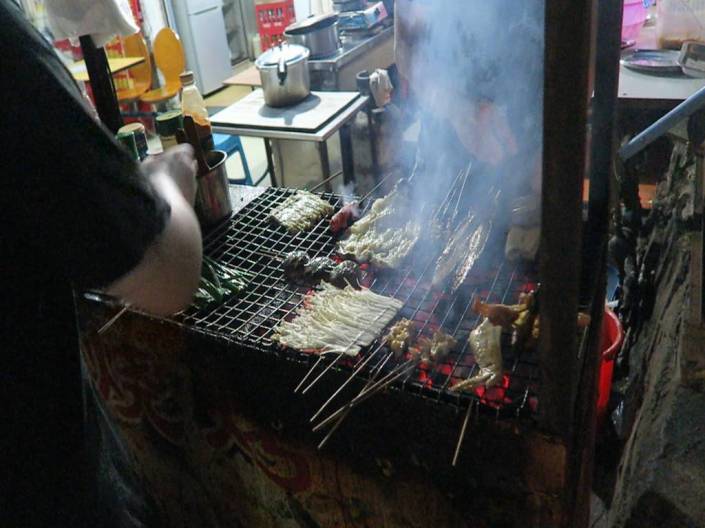
We went to our local barbecue spot (In truth, it was our first time going there since we moved to this new part of town) and checked out what they were offering. We stacked up everything in the basket and gave it to the laoban, and watched them cook it.
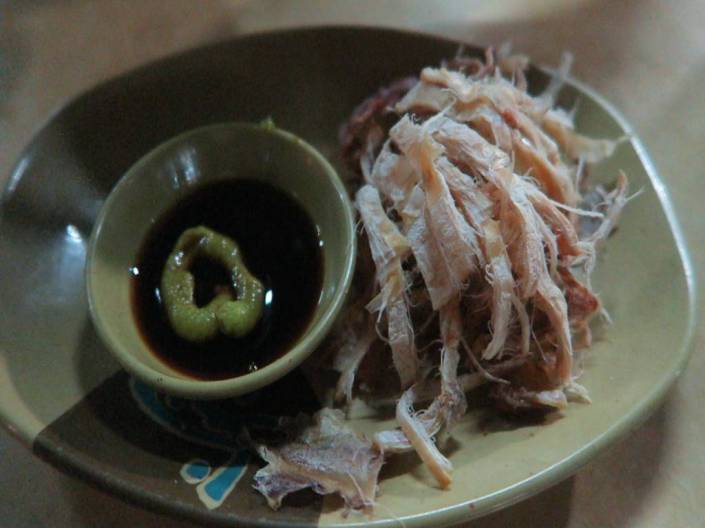
The first thing to sample was an appetizer. We had ordered some dried squid with wasabi and soy sauce, known as youyu (鱿鱼). This had the consistency of something like beef jerky, but with a seafood flavor. When you dip it in the wasabi and soy sauce together, it has a real kick to your nostrils!
The first two things I had tried were the enoki mushrooms (金针菇) and shiitake mushrooms (香菇). I love all shrooms, as they help you to see life clearly! Barbecued mushrooms are no exception, especially when they are topped with special lajiao. After that came tofu (豆腐)that is covered in some kind of spicy orange sauce and also barbecued. Very delicious – much tastier than plain old tofu, that’s for sure! Following the tofu was some spring onions (韭菜) that were delightfully tasty and flavorful. Of course they were covered in oil and barbecued, so they tasted much better than raw!
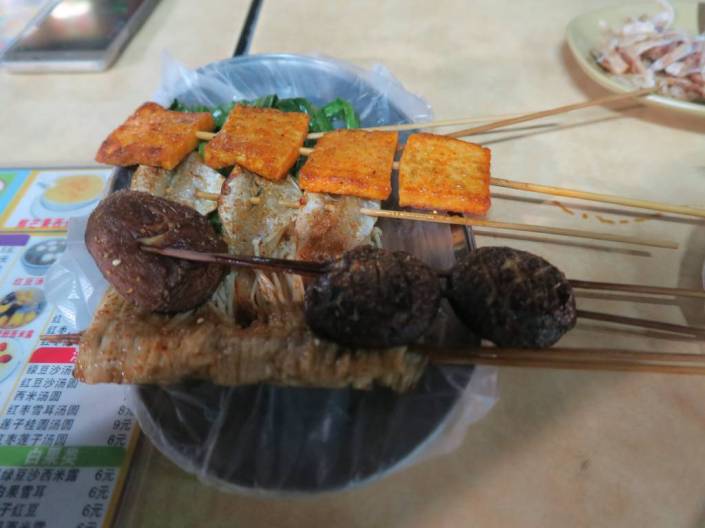
Next up was some koi fish (开心鱼). Now I really had no idea what exactly this skewer was when I saw it. I thought it might be dried shrimp that was barbecued. When we got home and looked it up, I was surprised to find out that it was in fact koi fish.
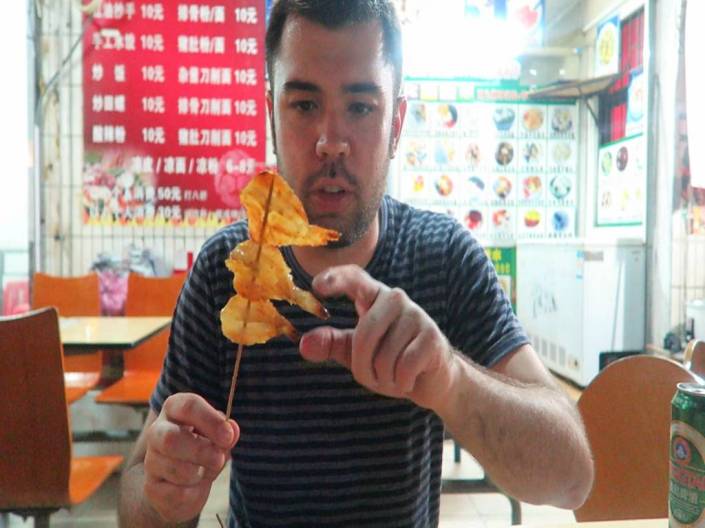
Upon trying this dish, it reminded me a lot more of fish jerky than anything. Overall a nice fishy flavor with that dried chewiness that we so love in jerky.
The last couple dishes were chicken and fish. The chicken (鸡腿) was fantastic. The meat was nice and juicy and tender, some of the skin was crispy, and the lajiao had my mouth on fire at the same time. The fish, which we found out was actually called Ribbonfish (I had thought it was just mackerel) was the best dish of the night, however. The skin was very crispy, the fish meat was pleasant and soft, and the best part is they took out the bones. I rarely eat fish in China because of the strong presence of bones – which I hate! Any Chinese fish dish where the bones are removed is worth 5 stars to me!


Above are the chicken and fish dishes – click the pictures for a bigger view! That was all we ate that night, and my was it good! The total for the bill came out to 62 RMB, or $9.48 USD! What a steal! Check out the video of this Chinese barbecue adventure on my YouTube channel, below! Please subscribe if you enjoy the content! What do you think of Chinese barbecue? Do you enjoy it? Please let me know in the comments!
How to make Honey Mustard Chicken Sandwiches
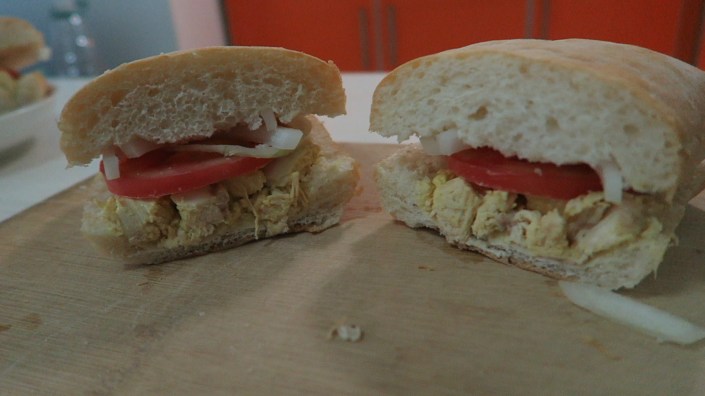
Living in China, Chinese food can get quite boring. That is why I started cooking – before I came to China 2 years ago, I really had no prior knowledge to cooking. After two years of learning, I decided to take my experience to the internet. I like to try and come up with new things all the time, and recently I was really craving some good honey mustard chicken sandwiches. So I came up with a quick and simple recipe using only 7 simple ingredients to make this glorious sandwich you see below:
Ingredients:
- 2 italian bread rolls
- 1-2 tsp mustard
- 1-2 tsp honey
- 1 tbsp mayonnaise
- 1 tomato sliced
- 1 onion sliced
- 2 chicken breasts
To make this sandwich, start by boiling the two chicken breasts in a pot of boiling water for 10 minutes exactly. This will ensure they are not overboiled and are relatively juicy on the inside still. While the chicken is boiling, slice up your tomatoes and onions, and also slice your bread loaves into halves. To make the honey mustard, simply combine the mustard, honey and the mayonnaise into a mixing bowl and stir it until the mixture gets creamy like the honey mustard you are used to seeing.
After the chicken is done boiling, remove the breasts from the pot and slice the breasts into long strips, turning them and slicing them into smaller chunks. When both breasts are cut up into a nice pile of pieces, transfer all the chicken into the bowl with the honey mustard. Stir the chicken together so the honey mustard coats all the chicken pieces nice and evenly.
Now it’s time to make your sandwiches! Using a spoon, spoon out the chicken and honey mustard mixture onto the bread, spreading it out evenly. Cover the chicken with 2 tomato slices and a few sliced onions, and press the sandwich together with the other half of the bread. Cut the sandwich in half for optimal presentation.
I consider this recipe healthier than others because I didn’t use salt, and I didn’t fry the chicken. It’s simply boiled and mixed in with the sauce, and that’s it. I really think you’ll be surprised at how much flavor these sandwiches pack in there – they’re excellent! Check out the recipe on our YouTube video, below!
Eating baozi (包子) and skateboarding in China
This morning I went down the street near the metro station at Dafen to grab some baozi and jump on my skateboard for the first time in a VERY long time. I talked about baozi already before in my first blog post, “What’s for breakfast in China?” but I wanted to take a video for this post, so I thought I would bring them back. Also the first baozi article I did was on beef baozi, and today they were pork!
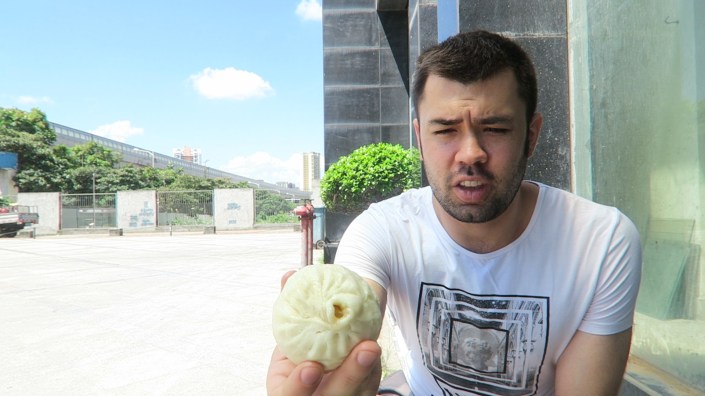
The baozi is a very traditional and one of the most common things that Chinese people eat for breakfast. This particular baozi was full of stuffed pork (Which was fatty and greasy, which is a little heavy for the morning but that’s why you don’t eat too many!) and also some cabbage, if I recall correctly. 1 of these baozi only cost 1 RMB, or $.15 USD so my breakfast only cost $.30 since I had two. That baozi was more than enough fuel to give me the energy I needed to pull off a few skateboarding tricks.
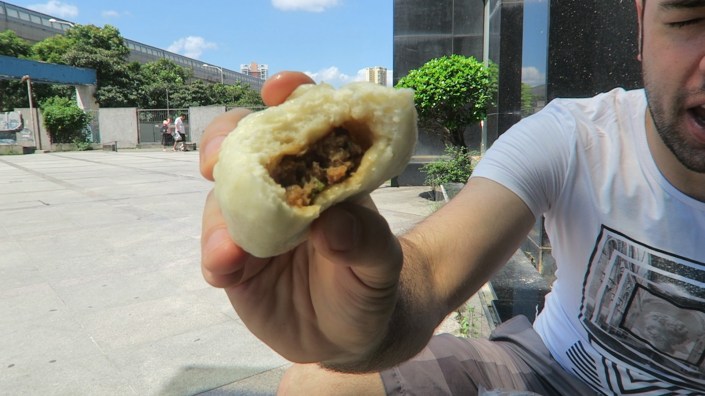
As I proceeded to bite into the delicious baozi, something insane happened. The fatty pork juices dripped out, and nearly landed on my shorts! Luckily I was quick enough to recover, only having to explain to the camera what had happened with my mouth open and simultaneously full of baozi. A baozi stain is no fun – I assure you and I am happy I avoided it. Those juices however, are delicious so I highly recommend taking a more full bite and making sure you get the juice with it! After finishing those delicious baozi, it was time for some skateboarding. I used to skate a lot in my younger years (13-20 years old) but pretty much stopped shortly after high school. However, it’s still fun to roll around and do some tricks sometimes!

An enjoyable morning it was, though hot! By the time I was done skating, I was absolutely drenched in sweat. Nevertheless, please be sure to check out the breakfast video from this morning, which also comes with a little bit of skateboarding attached! What do you think of baozi? Let me know in the comments!
Walking around at Dafen oil painting village
I recently had a chance to visit the Dafen Oil Painting Village (大芬油画村) near my home in Shenzhen. I happen to live very near, just a 5 minutes walk away from one of the most famous spots for artists to hang around in the world. The Dafen Oil Painting Village was founded in the early 90’s by a group of artists. Since then it has become a haven for some incredibly talented artists who churn out amazing replicas and original paintings at incredible prices.

So I thought it was time to take a walk through this village that everyone always talks about. I am not a big fan of art, however I do appreciate it. Although, I am not the kind of person who is going to spend a lot of money on a fine painting. While walking through this painting village, I saw some incredible works of art.


While walking through, I noticed a large number of paintings I had seen before. Notably, Rembrandts, Picassos, and Dali were probably the most common artists I saw replicas from in the entire village. I was hoping to get some cool pictures and footage INSIDE the art shops, but every owner was adamant about not taking photos or video inside their shops. This is because there are many people trying to copy artwork and they are trying to defend their “intellectual” property which I find ironic, since most of the work I saw were replicas anyway.

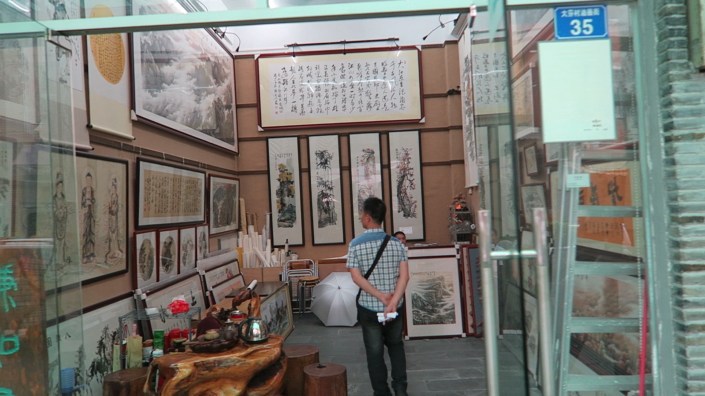
Just to show you the variety of different paintings at Dafen, here are a few more pictures!


Eventually I found a place that was offering very low priced handmade oil paintings for an incredible price: 25 RMB. or $3.80 USD. I did not really intend on buying any art, but for that price, even I can’t pass it up. Here’s the painting I chose:

Overall, I was very happy with my purchase and plan to return to the painting village again sometime, maybe I’ll even up my budget for something a little more grand! Please check out our walk through at the painting village in our YouTube video below:
Chang fen: A Chinese breakfast staple
This morning I returned to my local laoban to do a Chinese food video about breakfast. Today we had chang fen (肠粉) which is a common breakfast dish made with rice paste, eggs, vegetables, and ground pork covered in a pork fat broth with soy sauce and chopped garlic. I probably have chang fen at least once a week living here. I find it to be a relatively healthy option – as this is steamed and not fried, and I enjoy eating as healthy as I can.
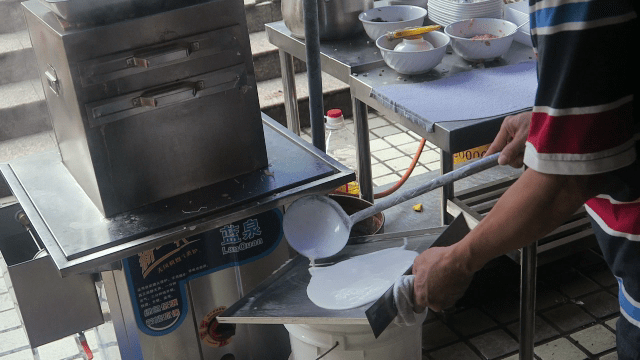
To make chang fen, a large multi-layer steam rack is used. Generally they start by pouring rice paste and covering the tray with it, and then adding ground pork, a few vegetables and cracking an egg or two on top. The mixture is stirred around and sent into the steamer for less than a minute. When it comes out, it is scraped off and set onto a serving plate.
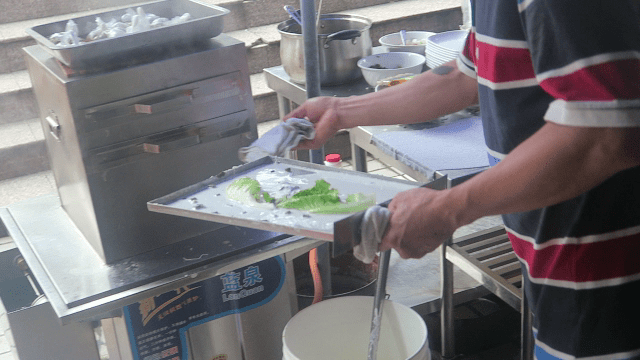
When it comes out, it is quite a pretty sight to behold. The taste of chang fen is interesting to say the least. The texture is sort of a thin jello-ey texture that without the sauce is not exactly bursting with flavor. Rice paste is of course made of white rice, and as we all know white rice has a fairly brand and neutral flavor. However when it is coupled with vegetables, meat, and a nice pork broth with garlic and some chili sauce on top, the flavors go a million ways! The pork broth gives a rich decadent flavor especially when you get those chunks of ground pork in the bite. Grasping some chopped chilis with your chopsticks in a bite adds a spicy aspect to this dish as well.

I also blogged about chang fen back in April, you can see that post here: Chang fen: A cheap, delicious and exotic breakfast in China. Don’t forget to check out the video from this morning’s breakfast which includes video of the cooking process and tasting, from my YouTube channel! Please like/subscribe if you enjoy the content!
How to make the Crispiest Oven Baked Potatoes
Today I threw together an excellent recipe for what are, in my opinion, the crispiest oven baked potatoes. I have always been a fan of the potato, in fact it is my favorite vegetable. I find that the potato tastes best when it is nice and crunchy, so let me tell you how to get them perfect! Let’s start with these simple ingredients:
- 4-5 medium potatoes, peeled and sliced into chunks.
- 1 half clove of garlic, chopped fine
- Olive oil
- Salt
- Pepper
- Ground red pepper
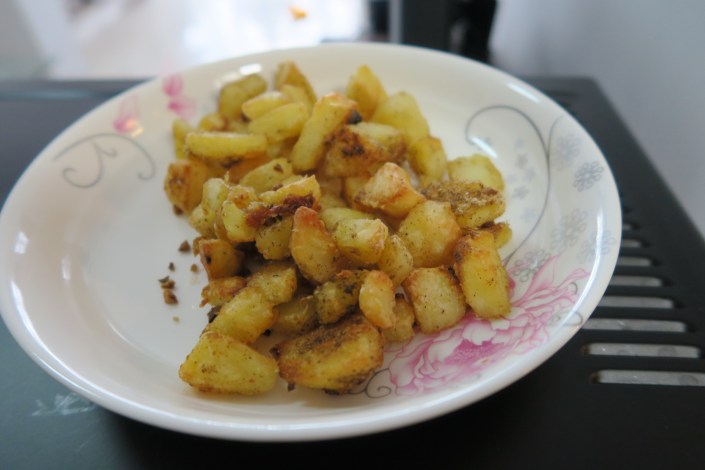
Start by washing and peeling your potatoes. Then cut the potatoes into halves and lay them face down on the cutting board. Cut them once down the middle, turn them and slice them into chunks. Bring a pot of water to a boil, add a little bit of salt and add the potatoes. Boil the potatoes for 15 minutes. While the potatoes are boiling, chop up the half clove of garlic. Once the potatoes are done, transfer them to a colander to drain the water and shake the potatoes for up to 10 seconds to get the edges roughed up. This will help to get the potatoes nice and crispy.
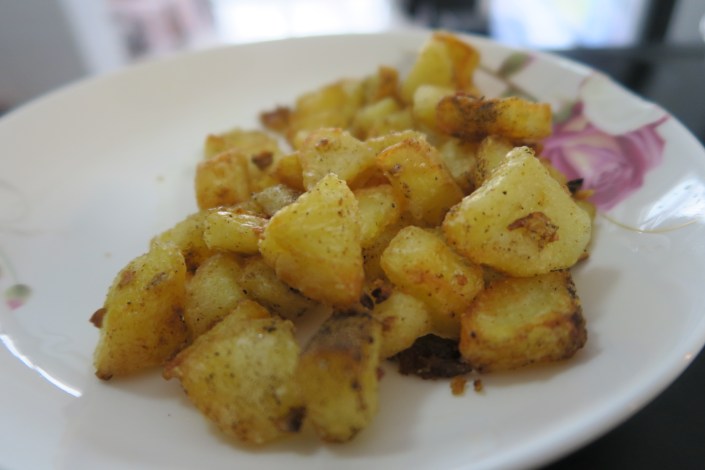
Next, line a baking sheet with aluminum foil and pour the potatoes over it. Season the potatoes with salt and pepper and drizzle with olive oil. Flip the potatoes and season the other side also, and add a little additional olive oil. Put into the oven at 230 degrees celsius, for 50-60 minutes. When the potatoes have been cooking for 25-30 minutes, take them out and flip the potatoes to the other side with a spatula. This will ensure the potatoes will have both sides crispy. Once they are done, take them out and drain the potatoes on paper towels for a couple minutes. Eat and enjoy these orgasmic potatoes! Make sure to check out my recipe video for these potatoes on YouTube below!
Finding bargains at the Temple Street Market in Hong Kong
Last week we had an excellent day trip to Hong Kong to get our mainland China visas stamped. While we were there we went to two locations: Chungking Mansions (Which is described in my last blog post) and also the Temple Street Market. Today I want to talk about the market. It was my first time visiting it and I was more than blown away!
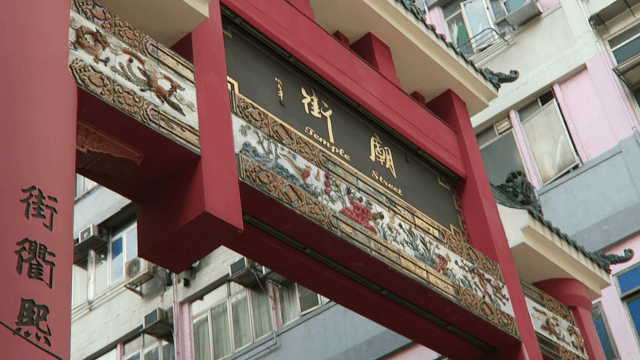
Getting to the market is very simple. From Jordan Station, take Exit A and turn right onto Jordan Road. Walk down and take another right onto Temple Street. Once you find the market, the entrance is marked by big temple-like gate, and the other side also has an identical gate that signals the end of the market.
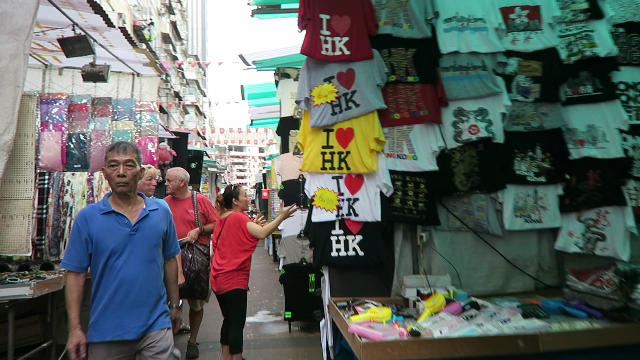
It takes about 7 minutes to walk through the market at a brisk pace, but you will be surprised how fast time flies when you start seeing the deals you can get. It may take only 7 minutes to walk through, but by the time you get to the end I bet at least an hour will have gone by! More than likely, you will also have found at least one deal on fashion merchandise that you can smile about!
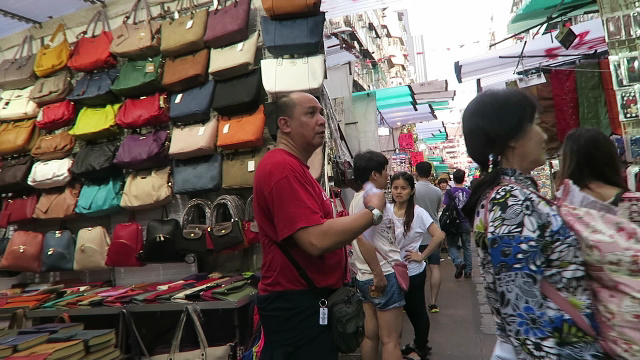
After I finished walking through the market I hopped on the metro back to Lo Wu station to cross the border into Shenzhen to return home. However, I didn’t come home empty handed! Here’s what I managed to wheel and deal out of the market:

I bought three high quality (100% cotton) t-shirts with brand name logos on them for an excellent price. The vendor lady asked for $204HK (USD $26) for the trio but I got her down to $140HK, (~USD $16) which is about a 30% savings, around $10 usd. Overall, I couldn’t be happier with my purchase, and I hope to return soon! Check out the walk through I did at Temple Street on my YouTube channel!:
Making a delightful spicy chicken stir fry at home
Today after working out at the gym I needed a protein-jammed recipe and of course the go to food for that is chicken breast. So I created what I call a spicy chicken stir fry, behold it in its gain-fueling wonder.
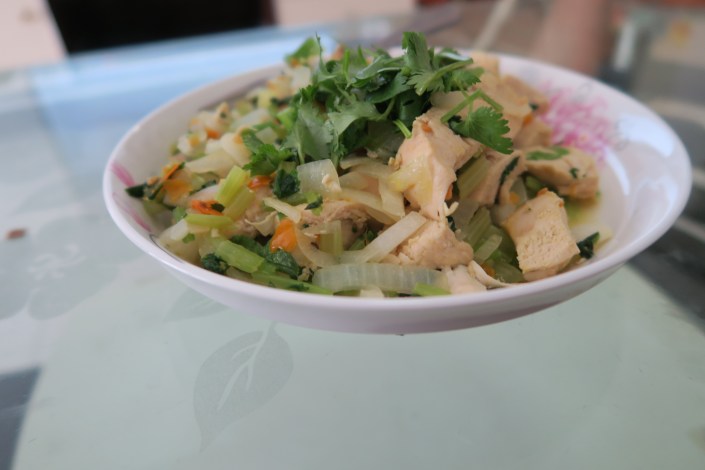
So how to make such a delightful and tasty dish? Here are the ingredients:
Ingredients:
- 2-3 bunches of cilantro, chopped.
- 2 big bunches of celery
- 1 white onion chopped.
- 2 tablespoons of Chinese lajiao (Chopped pepper chile sauce)
- 2 chicken breasts
Take 2 frozen chicken breasts and boil them in water for about 10 minutes to thaw and partially cook them. While they are boiling chop up the vegetables. When the boiling is done, remove the chicken breasts from the pot and slice them into chunks. Then add some olive oil to a frying pan and heat it up for about 30 seconds. Add the chicken, and add the vegetables and stir together to coat in the oil. Cook for 5 minutes, stirring occasionally. Next, add a couple scoops of lajiao and mix well to get the lajiao well distributed. Transfer the stir fry to a plate and garnish with chopped cilantro. Eat and enjoy your daily protein. Please have a look at the recipe video below!
That’s all for today, but stay tuned for some interesting videos from Hong Kong, later this week!
 Ian in China - Living in China content, Asia food and travel videos!