
traditional
Kung Pao Chicken and Ox Tongue: Spicy Sichuan flavor feast!
Living in China affords access to all of the culinary wonders that is Chinese food. China has many provinces and each one has their own special types of cooking. Sichuan food is renowned for being very spicy and that is just like the meal we had today at a traditional Sichuan restaurant located in the Longgang metropolitan area of Shenzhen. It’s located at the corner of Longping W Road and Aixin Road in Longgang.


It is a very beautiful restaurant There’s even a coy pond with fish swimming around! It’s quite a sight. This is some of the delicious food we had:

The first dish we had is what we know of as Kung Pao Chicken back home, or 宫保鸡丁. This is chicken meat along with peanuts, dried chiles, and leeks fried in a high heat wok covered in a sweet and spicy sauce. This dish is absolute heaven. A lot of Chinese dishes have bones but this is the few that actually use pure chicken meat with no bones. The meat was soft and moist and literally falls apart in your mouth. The leeks give a nice onion essence and the chiles give it some serious heat. This dish is actually one of my favorite Chinese dishes ever, hands down. The next dish we had was a bit different, but still spicy as hell!
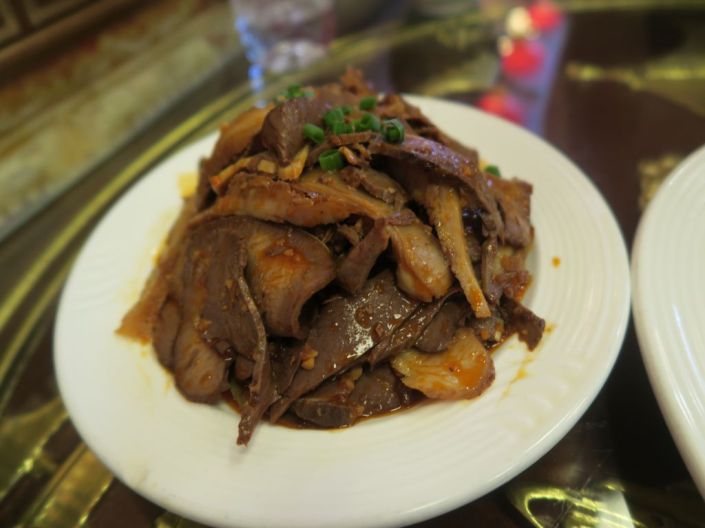
So this dish is called Fu Qi Fei Pian (夫妻肺片) which is sliced beef with ox tongue over a spicy chili sauce. This dish was served cold, but it sure is spicy hot! The tongue is nice and chewy which I really like and reminds me of tripe. It’s covered in a citrus style spicy chili sauce that compliments our other dish very well. Coupling a bite of tongue with the thinly sliced beef is a match made in heaven as you have chewiness mixed with moist tender beef.
So from tomorrow for the next week I will be traveling to Guilin from Shenzhen by sleeper train (It’s about a 13 hour train ride and I will be exploring much of that beautiful area! My blog probably won’t be updated for at least one full week, but when I get back, expect lots of interesting new Asia content! Don’t forget to check out this week’s Sichuan food meal, below:
Enjoying beef hotpot in Huizhou with LaoWhy86
This last weekend I took a trip out to Huizhou – a Tier 2 city in China that is just about a one hour bus ride from Shenzhen. I went there to meet my friend C-Milk, or more commonly known as LaoWhy86 on YouTube. We met at Huizhou’s finest beef hotpot restaurant for some drinks and a meal. The result was some delicious food, crazy Chinese baijiu and good times.
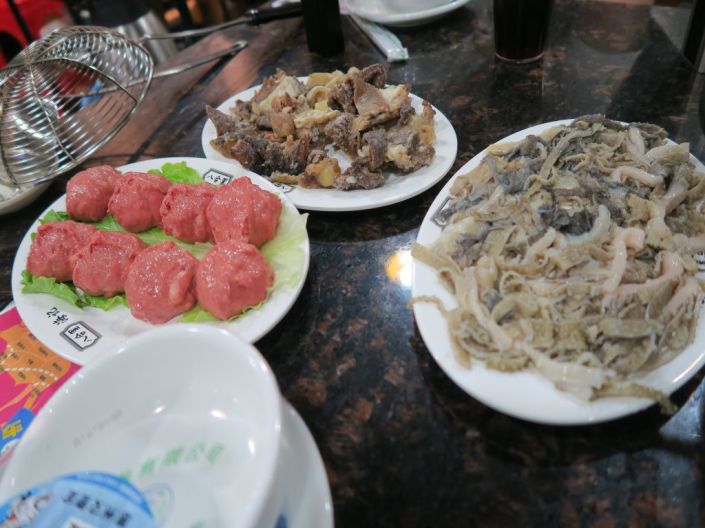
Pictured above are a few of the things that went inside our hotpot. This restaurant is well known for it’s beef and how they make their beef meatballs. Instead of grinding the meat in a grinder, they actually pound the meat for a continuous amount of time without actually cutting it, to make the meatballs. The meat is delicious, juicy, tender, and I found it to be bouncy and different than a western meatball.

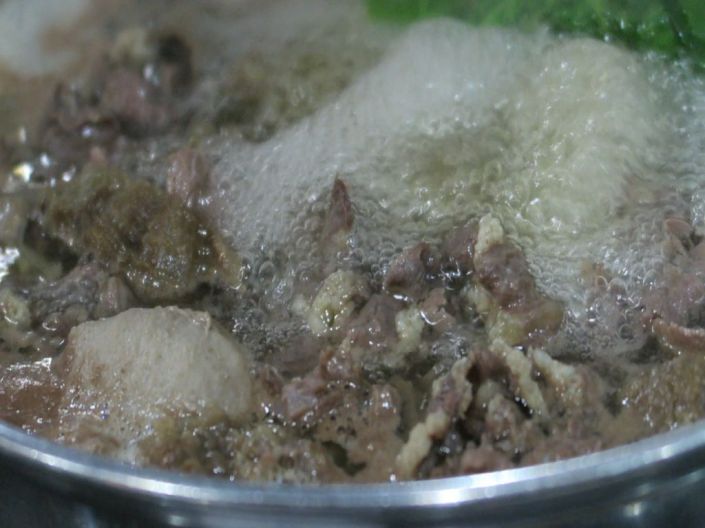
If you aren’t familiar with hotpot (火锅), I’ll fill you in a bit on how it works. There is a large pot of broth in the middle of the table (On top of a hotplate) that is generally filled with spices, vegetables, raw meats, chile peppers, etc and cooked until done. Once it’s done, you just take what you want out of the pot, dip it in your dipping sauce, and you are eating like a king. Hotpot is a little different than other styles of eating because you must cook your food first, but sometimes waiting for it makes it taste even better. Here’s a nice picture of mouth watering beef simmering in our hotpot.
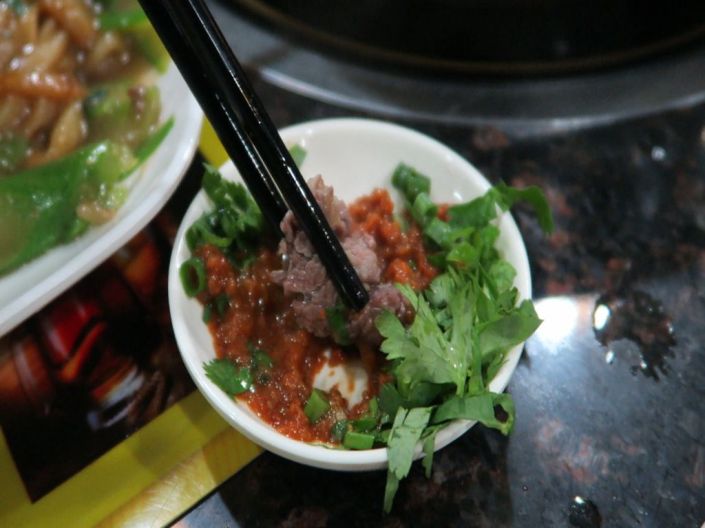
Now the dipping sauce was something out of this world, or so it seemed literally so! When I dipped my first strip of beef into this delicious dipping sauce, I was immediately reminded of a spicy mexican blended salsa. I tasted elements of tomato, cilantro and definitely some chile peppers!
We also ordered some incredibly delicious beef noodles (炒牛肉河粉) that tasted surprisingly creamy. It seemed to be covered in a sauce that reminded me a lot of western gravy, the style that you would put on top of mashed potatoes. It was a little different, but the noodles were sweet and delicious and the beef was nice and tender.
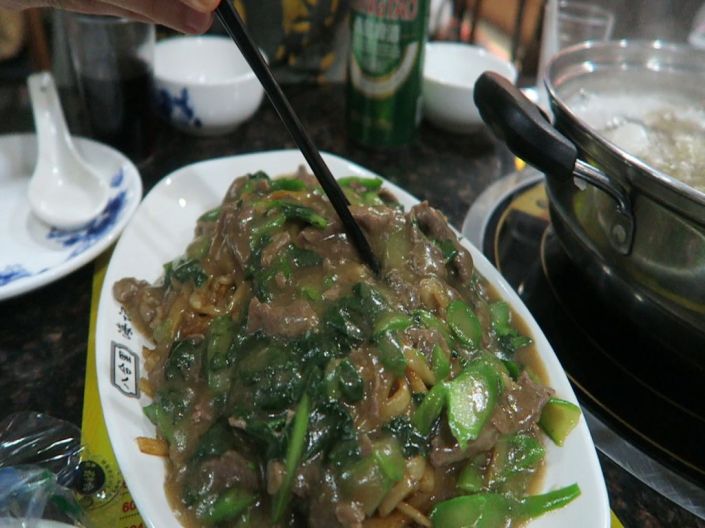
After a few drinks or ten of wine/beer/baijiu, we went back to my friends house for some arm wrestling. It was a good time to say the least!


Make sure to check out my video from this evening – I think you have to see the video to understand the scope of our experience! Don’t forget to check out my channel on YouTube and subscribe if you like the material!
Making ribs and potato salad on the Fourth of July!
Ah, the Fourth of July. The big holiday to celebrate our independence from the British – and I’m in China. Well, though I am far away from home, it is that distance that makes me go so far to learn how to cook! I was craving delicious BBQ ribs and potato salad, which is typical Fourth of July fare. I had never made it before, but I did a little bit of research online, made a few modifications, and came up with a couple delicious recipes! Here is the product of what I spent yesterday afternoon cooking:
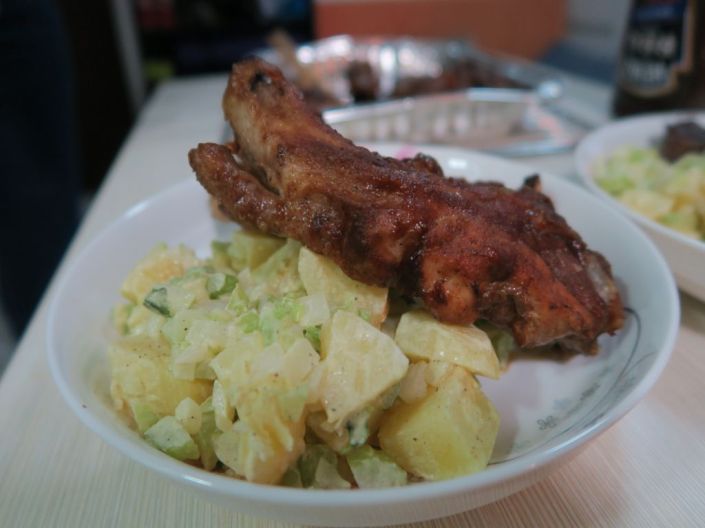
The labor altogether probably took me about three hours, but it was well worth it! Here are what you need to make both the potato salad and the ribs.
Ribs Ingredients:
- 1-1.5 kg of pork ribs
- Bottled BBQ sauce (I used Heinz)
- 1/2 cup brown sugar
- 1 tsp Ground black pepper
- 1 tsp Ground red pepper
- 1 tsp Garlic powder
- 1 tsp Salt
Potato Salad Ingredients:
- 5 medium potatoes, peeled and chopped
- 1 white onion chopped fine
- 1 bunch of celery chopped fine
- 1 big teaspoon of mayonnaise (The more the better usually)
- One big teaspoon of mustard
- Salt to taste
- 1 tsp ground pepper
Let’s get to how you make these delicious dishes! Let’s just start with the potato salad:
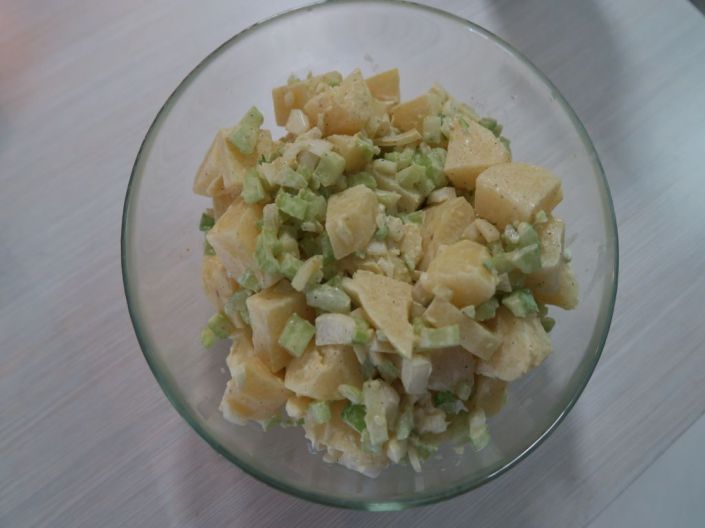
Potato Salad:
To make the potato salad, start by peeling and chopping your potatoes into chunks. Next, boil the potatoes in a pot for 15-17 minutes. Drain into a colander and let cool for a few minutes. In the meantime, chop the white onion and celery fine. Once the potatoes have cooled a bit, combine the potatoes with the chopped celery and onion, the mustard, the mayonnaise, and the salt and pepper. Mix together until the mayonnaise is well distributed. I only used one big teaspoon for my salad because I don’t like excessive mayo – You can even double up on it though if you want it a little creamier. Put it all into a bowl and wrap it in plastic, and put it in the fridge for 30 minutes – 1 hour to chill it. Delicious!
Next, let’s move onto the ribs.
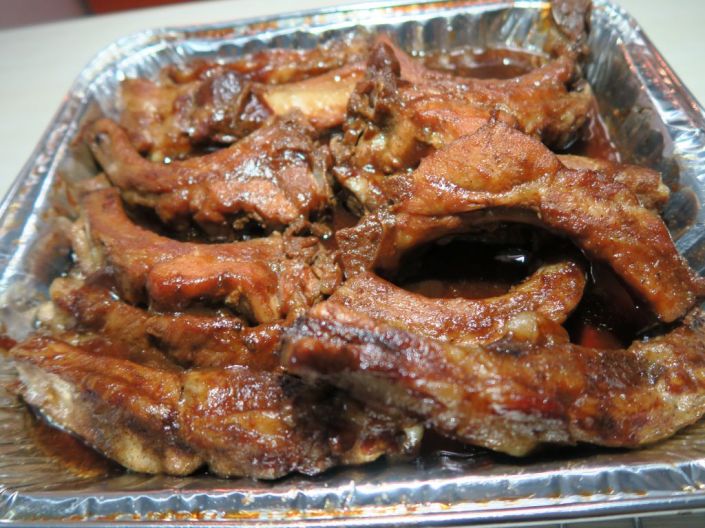
To make these mouthwatering ribs, start by combining the brown sugar with the salt, pepper, red pepper, garlic powder, and the brown sugar in a bowl and mixing it all together. Pour it out onto a tray or some kind of surface and spread it out. Wash and pat dry the ribs with some paper towels. Then start by dipping the ribs into the rub, and be sure to get each rib well coated on both sides with the rub. Cover your cooking tray in aluminum foil. Once all the ribs are coated, pop them into the oven at 150 degrees celsius (300 Fahrenheit) for 2 hours. When they are done, pull them out and remove the foil and then cover them with your bottled barbecue sauce. Brush them with a sauce brush to get them well coated. Place them in the oven for 5 more minutes, remove and brush the other side, and cook for an additional 5 minutes. Then remove the ribs, let them cool for a few minutes and enjoy this delectable Fourth of July treat! Feel free to check out the recipe video for both of these dishes from my YouTube channel below!
Zhou: A traditional Chinese porridge breakfast.
This morning I went down with my girlfriend to yet another local laoban at Dafen. For breakfast we had pi dan shou rou zhou (皮蛋瘦肉粥), which is a delicious rice porridge with pi dan (The century old egg which I have mentioned many times in this blog), a few assorted vegetables and some pork.
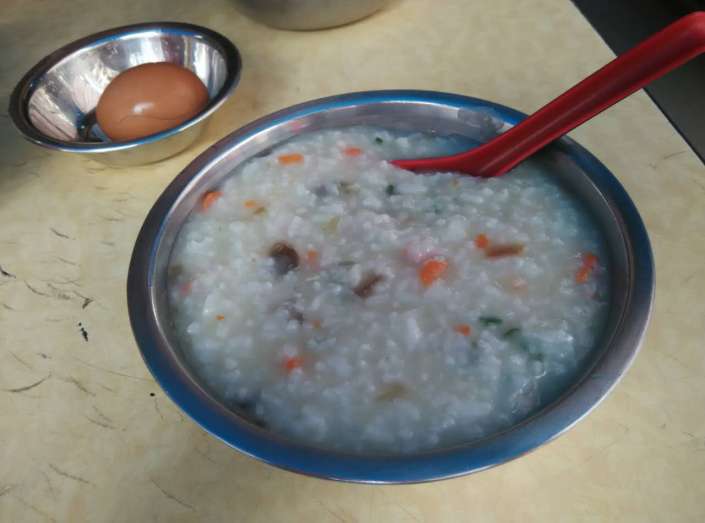
Not only do I absolutely love this porridge, it’s very cheap! At only 3 RMB a bowl, that is about a half dollar US. One bowl is also very filling. This is a very traditional dish that many people eat in Chinese villages throughout the country. This specific zhou however is a little different – many villages will just do a plain rice porridge with nothing else. This one is a bit of a “designer” porridge as it has pi dan and meat and vegetables added.


Let’s talk about the taste of pi dan shou rou zhou. There are a couple words I can use to describe it. Light, creamy, smooth and delicious! Normal rice porridge is well, let’s face it, kind of a dull meal, but Chinese people generally would eat it with a side mantou, 馒头, which is kind of a bread-roll, and vegetables. I mentioned before this is like designer zhou, sort of a fancy kind. The addition of the pi dan is excellent because it gives the zhou a really creamy and delicious flavor and texture. My personal favorite way to eat it is by adding some lajiao to it:
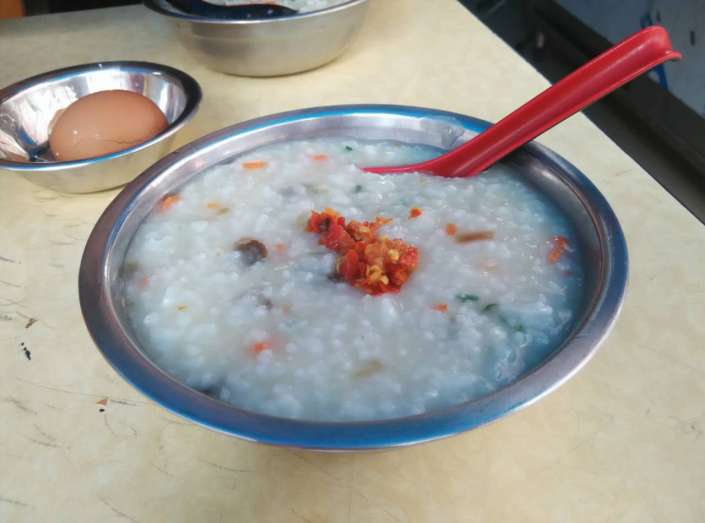
Overall, zhou is one of those classic Chinese breakfasts that is filling, cheap, and delicious. That’s about it for today’s entry but I’d like to leave you with Episode 7 of my cooking show: Lemon Lajiao Chicken!
 Ian in China - Living in China content, Asia food and travel videos!